
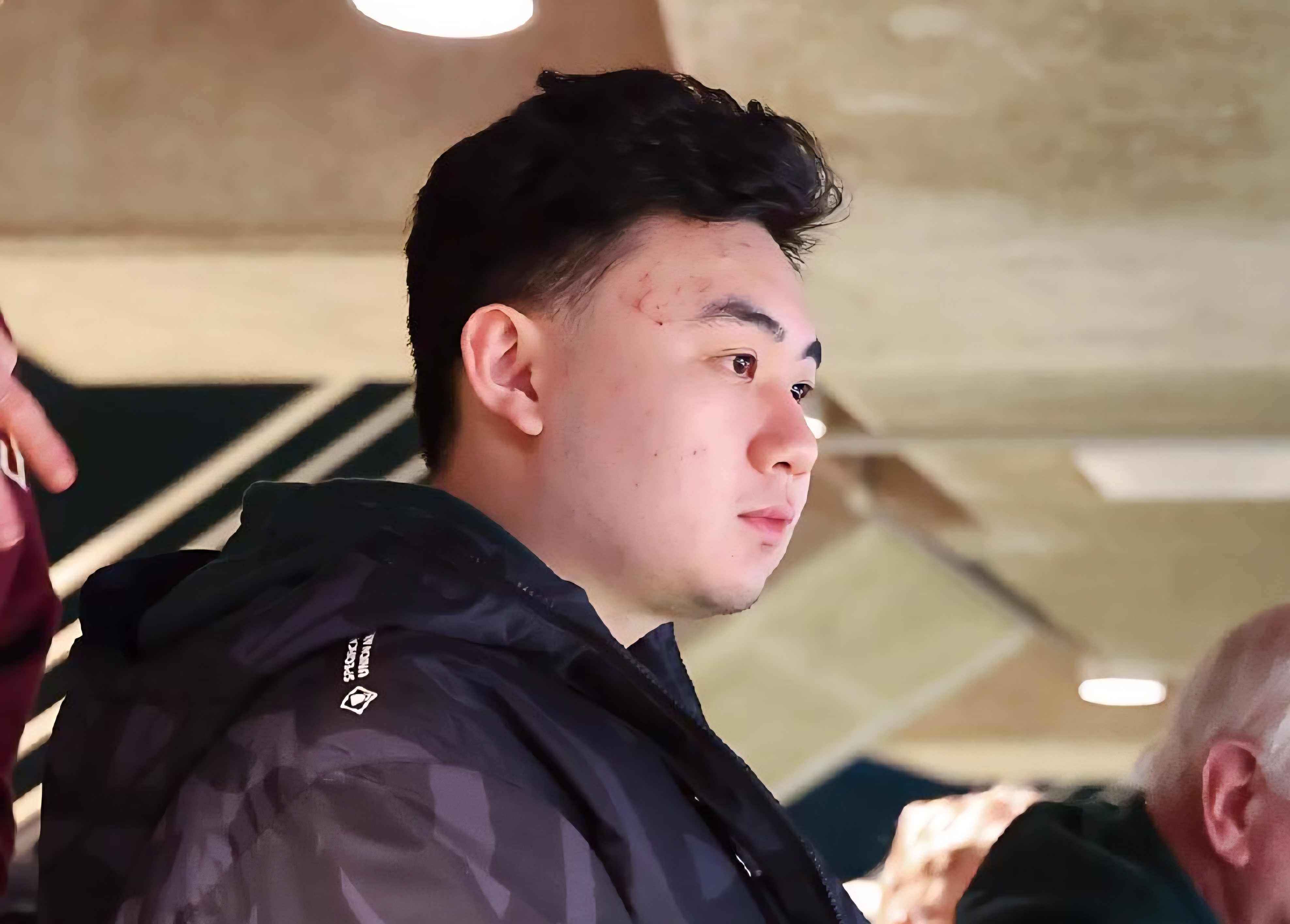
After surviving the shooting at MSU, John Hao's resilience has been aided by the Spartan community
It's been a long, trying journey — but Hao is optimistic about the future
This story is presented free of charge, with no advertisements, for an enjoyable reading experience. Please consider supporting our work by subscribing to Spartans Illustrated (click here). Thank you for your support.
John Hao: A Tapestry of Resilience, Community, and Transformation
The soft glow of an NBA basketball game on the hospital television was John Hao’s first vivid memory after surgery, a beacon of normalcy piercing the haze of recovery.
Not the incessant beeping of monitors, not the sterile scent of antiseptic, nor the blurred figures of doctors hovering over him, but the flickering light of the game on his second night in Sparrow Hospital.
Someone had asked if he wanted to watch; he hesitated, then agreed.
For a few hours, basketball filled the hollow spaces left by the February 2023 mass shooting at Michigan State University, an event that had altered the trajectory of his life.
Hao, a second-semester junior at Michigan State, was a young man brimming with promise, ambition, and curiosity when a bullet struck him down on the northern edge of campus.
The injury was catastrophic, stripping him of mobility from the waist down. His life, as he had known it, was shattered in an instant. Yet, from his hospital bed, Hao’s mind was already at work, adapting, recalibrating, and planning the path forward.
“I tried to adjust myself really well,” he would later say, his voice devoid of bitterness, reflecting a methodical determination that has now become his hallmark. “I try to fit with my new status.”
A Foundation of Unwavering Support
Hao’s family became his anchor in the storm.
His mother quit her job in China and relocated to the United States to care for him full-time, a sacrifice that reshaped her life to prioritize his recovery. His younger brother left friends and familiarity behind, transferring from China to be by his side.
His father, though remaining in China for work, makes frequent visits, his presence a steady reassurance across the distance. To Hao, these acts of devotion were love made tangible, fueling his resolve to move forward.
“Their sacrifices,” Hao later reflected, “showed me what family really means.”
The Michigan State community also enveloped Hao with a rare and profound intensity.
Tom Izzo, the university’s head men's basketball coach, had visited him in the hospital shortly after the shooting, and – in the months and years since – has been struck by his resilience.
“He never complains, he never bitches,” Izzo said recently about Hao. “He is unbelievably a motivating human being.”
Izzo, who has witnessed countless athletes rise and fall in his career, saw something extraordinary in Hao: a young man whose spirit refused to be diminished by tragedy.
“I’m just amazed by how upbeat, positive (he is), how far he’s come already, how hard he works,” Izzo said.
The broader Spartan community echoed this support. When Izzo spoke at a campus gathering after the shooting, expecting a modest turnout, he was met by thousands – students, faculty, alumni, local residents, and community members – united in solidarity.
“It wasn’t just the school, it wasn’t just the administration, it was our entire community,” Izzo reflected. This outpouring was a testament to the Spartan spirit, a collective resolve to rally around their own.
Even small interactions carried profound weight for Hao.
In a mid-Michigan Costco, months after his hospital stay had ended, Hao encountered a nurse who had cared for him during his stay.
“Oh, I’m so pleased to see your recovery so well,” Hao remembers her saying, her joy genuine as they posed for a photo together.
“I don’t have the picture,” Hao shrugged, with a laugh. “It’s on her phone.”
But the moment lingered in his mind, a quiet milestone in a journey that has been marked by human connection.
A Network of Connection and Camaraderie
Mex Carey, a key figure in MSU’s athletics communications team, became Hao’s bridge to the Spartan basketball program. Carey’s dedication went beyond logistics – arranging tickets, transportation, and access to practices and games at the Breslin Center – it was a labor of love.
“(Carey) deserves more credit than most because he’s been the conduit,” Izzo said. Hao felt this deeply, expressing gratitude for Carey’s quiet but unwavering support, which made him feel both protected and empowered.
Thanks to Carey and Izzo, Hao became a familiar presence around the Spartan basketball team, attending practices and games, and being present for locker room moments that aren’t typically open to outside guests.
Players like Jaxon Kohler, Carson Cooper, and (former Spartan) Gehrig Normand extended genuine camaraderie, passing him the ball after practice, rebounding for him, and letting him shoot from wherever he could manage from his wheelchair.
One day, Hao recalled, Normand playfully punched him during a class, sparking laughter and a lasting friendship.
“We just talked to each other for a while and worked together on assignments,” Hao recalled, smiling. “It was really nice, very energetic, very kind.”
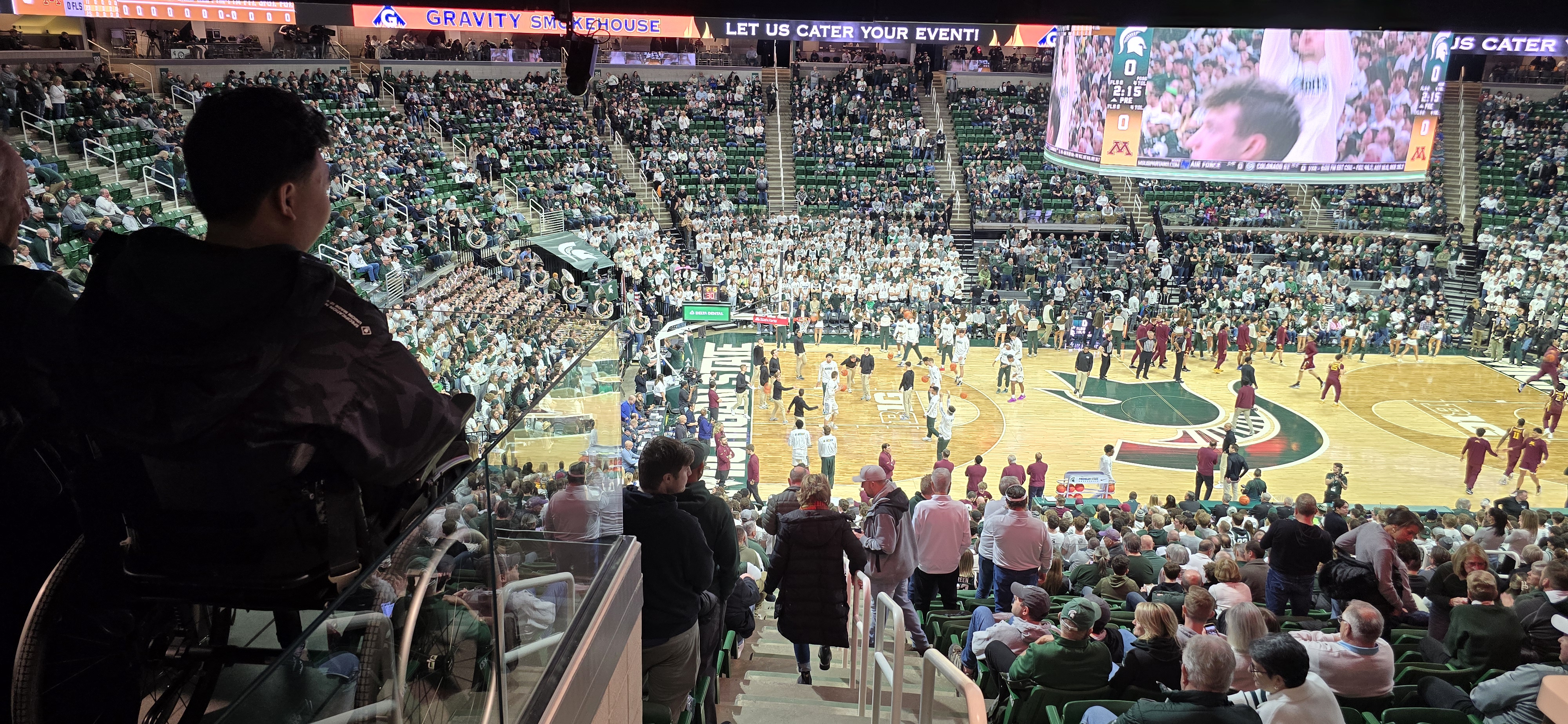 Photo credit: David Harns/Spartans Illustrated
It was small interactions like these that wove Hao into the fabric of the team, offering mutual inspiration: his presence reminded players of perspective, while their kindness gave him a sense of belonging.
An unexpected mentor for Hao also emerged in James Harden, the NBA star he had admired since 2017. Their connection began at a fan event in China, where Harden’s generosity – signing shoes, engaging in conversation, and sharing insights into professional basketball – left a lasting impression.
Over time, Harden has become more than an idol; he is a mentor, answering Hao’s questions about the sports industry and offering guidance on becoming a player agent.
“They never say no to me,” Hao said of Harden’s team. “Every time I need some help, (every time) I need to learn something, they never say no.”
This mentorship has opened doors to a world Hao aspired to join, blending his passion for basketball with a professional vision.
The Grind of Recovery and Resilience
Recovery has been a long, arduous journey, with clinical trials in Michigan, Minnesota, and Illinois each offering a beacon of hope for regaining mobility. The process is grueling, with setbacks inevitable. PTSD lingered, bringing flashbacks and moments of despair that tested Hao’s resolve.
Yet he developed a method for persistence, leaning on his family, friends from China and the U.S., and the broader MSU community.
“There are hard days,” he admitted, “but you find a way to keep going.”
Academically, Hao was relentless, tackling 34 credits in a single year while navigating the dual challenges of recovery and study. Each class, each assignment, was a step toward reclaiming a life interrupted.
His injury had changed his body, but it had not diminished his ambition; if anything, it deepened his resolve. Michigan State’s sports business management program provided a perfect bridge, blending classroom theory with practical exposure to the industry he aimed to enter.
Hao’s reflections on the shooting reveal his analytical nature. He recalled a moment of hesitation that day – whether to skip that class for dinner with friends – but his ultimate choice put him on the path that placed him in harm’s way. He doesn’t dwell on regret, though; instead, he frames it as a reminder of life’s unpredictability.
“You make choices, and sometimes they lead you somewhere you didn’t expect,” he said, his pragmatism tempered by optimism.
A Symbol of Perspective and Perseverance
Hao’s presence became a touchstone for the Spartan basketball team. And it still is to this day.
Before a practice last season, Izzo asked him to sit at the center of the court, the team circling as he shared his story of perseverance.
“Basketball is not the most important thing in life,” Izzo told them afterward, emphasizing the lessons Hao’s courage offered. “John’s overcome a lot of difficulties, and we can do the same thing in basketball.”
For the players, Hao’s resilience was a reminder of gratitude for their abilities and the fragility of life.
His first live game post-injury was a milestone.
Surrounded by friends and MSU faculty members, Hao felt the thrill of the game and the affirmation of belonging. The victory on the court mirrored the incremental victories in his own life – each a testament to his discipline and resilience.
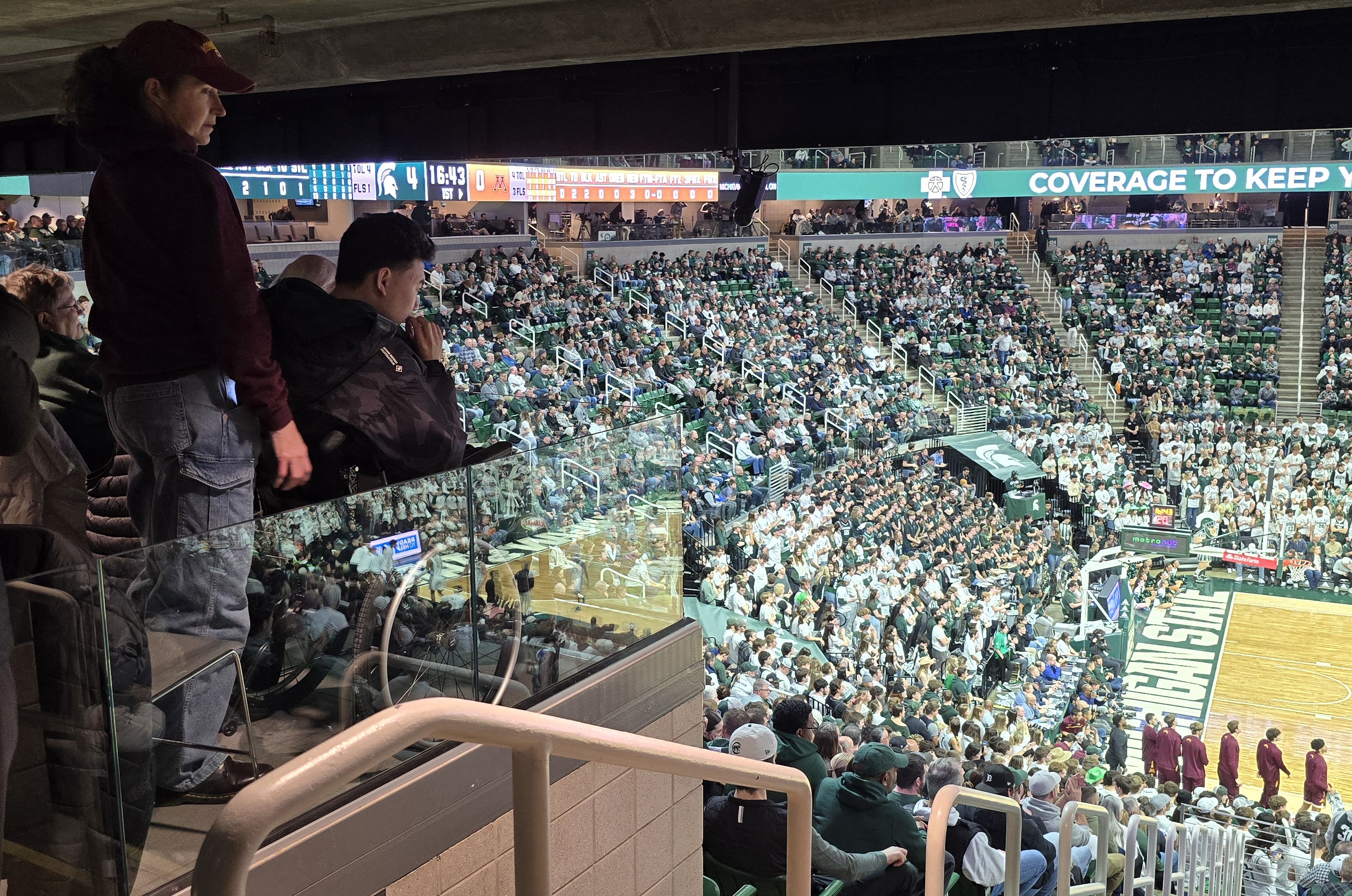 Photo credit: David Harns/Spartans Illustrated
A Vision for the Future
As Hao works through his final undergraduate semester, with only three classes left in his sports business management degree, he sees the finish line clearly. His ambition to become a sports agent remains undeterred, enriched by the unique perspective his injury has given him.
He understands both the vulnerabilities and opportunities in professional sports, an insight few young professionals can claim. His connection with Harden, who has shared intricacies of contract negotiations and industry dynamics, has been an education in itself, while MSU’s programs have provided practical experience through projects with clubs and agencies.
Hao’s optimism is disciplined, grounded in gratitude for the network that sustains him. His mother’s daily care, his brother’s companionship, and his father’s visits form a resilient safety net.
The Spartan community – classmates adapting to his needs, professors ensuring accessibility, and staff members like Carey facilitating his involvement – has been a backbone of support. To Hao, these interactions are quiet proof of humanity’s capacity for empathy and interdependence.
Even though physical limitations persist, Hao has found a rhythm. Study sessions, team practices, and conversations with friends provide stability. The kindness of strangers, the adaptability of peers, and the commitment of mentors like Izzo and Carey have taught him that resilience is not built in isolation but through shared effort.
Spending time with MSU greats during "Grind Week."
Working with MSU staff to land a valuable internship.
“Everywhere you turn, everyone’s been nice and helpful,” he said, his voice reflecting quiet appreciation.
A Legacy of Impact and Humanity
Hao’s story is not just about survival; it is about thriving in the aftermath of tragedy.
As he prepares for graduate studies and a career in sports agency, he carries the accumulated wisdom of a community that nurtured him and a deep personal understanding of resilience. The injury, while life-altering, opened unexpected avenues: deep friendships, mentorships, and exposure to professional networks that most likely would have been inaccessible otherwise.
His presence has left a mark on those around him.
For the Spartan basketball team, Hao is a reminder that the court is not the ultimate arena for testing character. For classmates and faculty, his commitment to academics and recovery exemplifies perseverance. For the broader community, his story underscores the transformative power of empathy, connection, and shared effort.
Looking back, Hao identifies blessings amid the hardship: the bonds forged in crisis, the lessons in empathy and perseverance, and the opportunities to influence others. His journey, situated at the crossroads of adversity and opportunity, illustrates a rare confluence of courage, intellect, and humanity.
From the hospital bed to the Breslin Center, from the classroom to professional ambition, Hao exemplifies a remarkable synthesis of vision and heart – a narrative that resonates far beyond basketball, touching the universal human quest for purpose, connection, and triumph over adversity.
This story has been presented free of charge, with no advertisements, for an enjoyable reading experience. Please consider supporting our work by subscribing to Spartans Illustrated (click here). Thank you for your support.