Sign In To Your Spartans Illustrated Account
SNew to Lockerverse?
Create an accountLOCKERVERSE
LOCKERVERSE
New to Lockerverse?
Create an accountLOCKERVERSE

Michigan State continues to find success on the recruiting trail in the early stages of head coach Pat Fitzgerald's tenure, as class of 2027 three-star Ohio EDGE/defensive end Jack Schuler announced his commitment to the Spartans on Thursday. Schuler's commitment comes on the heels of a visit from MSU defensive coordinator Joe Rossi and defensive line coach Winston DeLattiboudere III in Ohio on Wednesday. Following the conversation between the parties, Schuler was ready to pledge to the Spartans. Michigan State offered Schuler a scholarship opportunity in February. He quickly made the the roughly four-hour trek from Columbus, Ohio to East Lansing, Michigan for a spring visit on March 21. It won't be long before Schuler returns to MSU's campus as well, as he has an official visit booked with the Spartans for the weekend of June 19 through June 21. According to the 247Sports Composite rankings, Schuler currently ranks as No. 1,034 recruit overall, No. 79 EDGE prospect and No. 39 player in the state of Ohio in the 2027 class. Looking at the Industry rankings at On3/Rivals, Schuler ranks as the No. 2,014 prospect overall, No. 180 EDGE and No. 112 player in the Buckeye State.In addition to Michigan State, Schuler has garnered scholarship offers from Connecticut, Marshall, Liberty, Central Michigan, Toledo, Ball State, Miami (OH) and Kent State.Schuler currently attends Bishop Watterson High School in Columbus, Ohio. As a junior in 2025, he helped lead the Eagles to a perfect 14-0 record and a second consecutive state championship. Schuler recorded 84 total tackles, 20 tackles for loss and nine sacks this past fall. He earned first-team All-District accolades, and was an All-State honorable mention selection. In 2024 as a sophomore, Schuler was a part of a Bishop Watterson team that went 16-0 and also won a state title. The 6-foot-5, 240-pound Schuler has some positional versatility as a strong-side defensive end or a stand-up rush end, and he could potentially play either spot once he arrives at MSU. At Michigan State, Schuler will play under Fitzgerald, Rossi, DeLattiboudere, rush ends coach Andrew Bindelglass, assistant defensive line coach Jake Chaney and the rest of the staff. With Schuler now joining the group, Michigan State's 2027 recruiting class has grown to seven total commitments as of press time, which is before official visits begin. He joins four-star defensive end Ohimai Ozolua, three-star safety Ty'ire Clark, three-star offensive tackle Jack Carlson, three-star quarterback Eli Stumpf, three-star offensive lineman Grant Adloff and three-star running back Savior Owens.
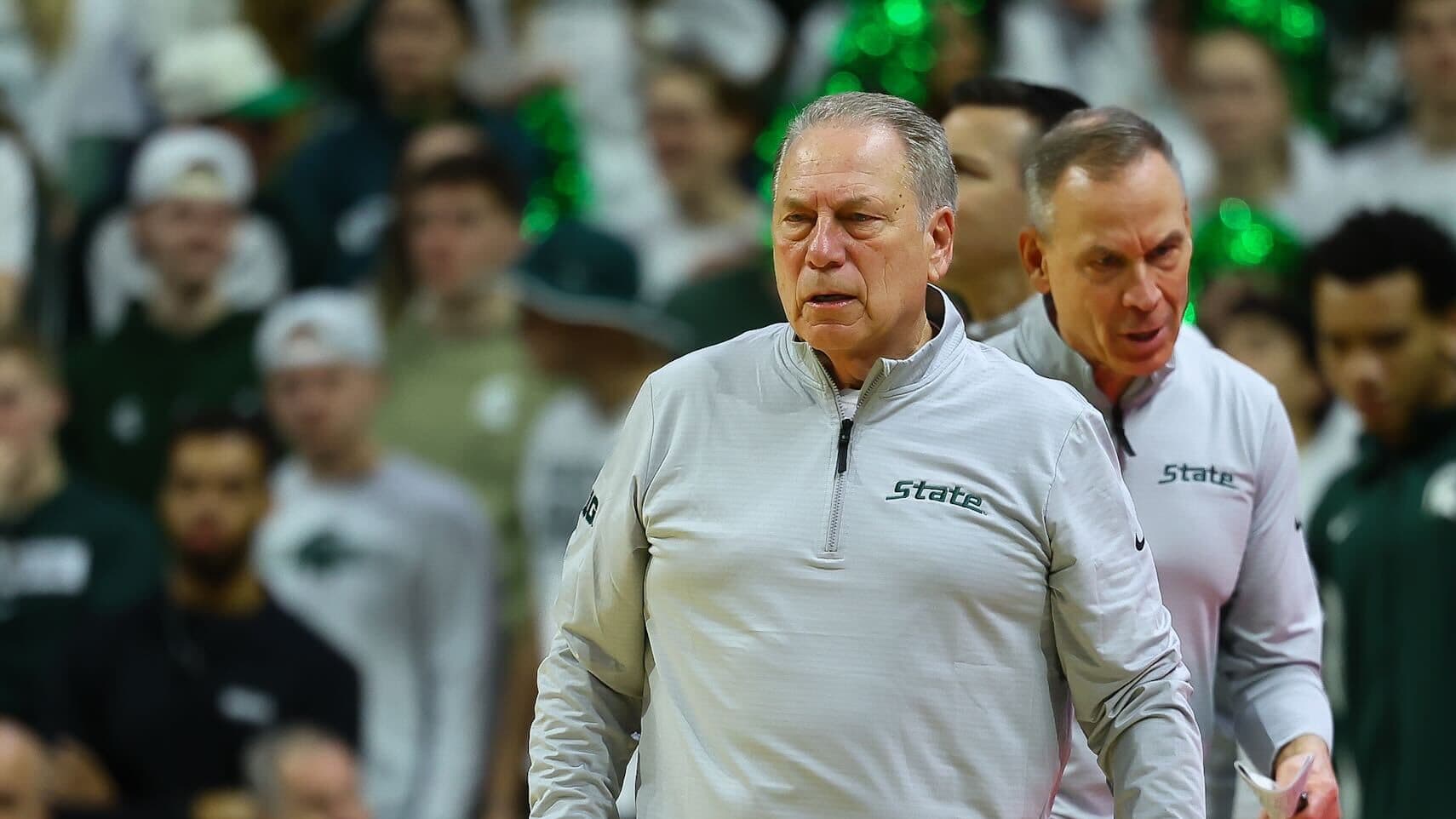
It has been over a month since Tom Izzo and the Michigan State Spartans were eliminated from the NCAA Tournament by the UConn Huskies in the Sweet 16. It will also be approximately six months before next year's team takes to the court again. With the commitment of Anton Bonke on April 22 and the departure of guard Divine Ugochukwu via the transfer portal, it will now likely be a quiet summer in East Lansing on the basketball front.But one thing that Spartan fans can count on is that one of the best coaches in the history of the game will once again be patrolling the sidelines next season in the Breslin Center. As summer beckons, it is a good time to look back and reflect on the amazing career - so far - of Tom Izzo.Today kicks off the first installment of a three-part series on Izzo's many achievements to date.First, we will review Izzo's dominance over the Big Ten Conference, as well as some of his raw statistics and accomplishments in the Big Dance.In part two of this series, we will take a closer look at two NCAA Tournament factors where Izzo especially shines: wins as the lower seed and wins on a two-day prep. Finally, in part three, we will dig into some more advanced NCAA Tournament performance metrics and learn exactly how unique Izzo's accomplishments are relative to expectation and relative to every coach in the modern history of the Big Dance.Big Ten DominanceTom Izzo is currently the winningest coach in the history of the Big Ten Conference. He will likely hold onto this title for the foreseeable future.As of the end of the 2026 season, he currently holds the record for both total wins at a Big Ten school (764) and total Big Ten conference wins (375).Izzo's total win count exceeds second place (Indiana legend Bob Knight, 659 wins) by over 100 wins and the next highest active coach (Matt Painter of Purdue, 501) by over 250 wins. Knight is also currently in second place in all-time Big Ten wins with 353. Painter is sitting at fourth place (251 wins) just behind his predecessor, Gene Keady (265 wins).In 2025, Izzo tied the record for the most regular season Big Ten Titles (11). Knight and Purdue's Ward Lambert (1919-1946) also both have 11 titles.Izzo also owns the record for the most Big Ten Tournament titles at six. Former Ohio State coach Thad Matta is in second place with four titles. Painter and former Wisconsin coach Bo Ryan each have three titles. NCAA Tournament PerformanceWhile Tom Izzo's dominance over Big Ten opponents is remarkable, college basketball fans across the country will always remember Izzo as "Mr. March" for his consistent excellence in the Big Dance.Going forward, note that all NCAA Tournament stats and metrics are from the current modern era of the tournament, which I define as starting in 1979. This is the first year when teams were seeded and it is was the first time the tournament included more than 32 teams. Most fans are aware of Izzo's current record of 28 consecutive NCAA Tournament appearances. Mark Few and Gonzaga are right on the Spartans' heels with 27 consecutive appearances. But the next closest active steak is Purdue with 11, thanks, in part, to the fact that Kansas and Bill Self's 2018 tournament appearance was vacated.But Izzo's March accomplishments go far beyond simple staying power.As of 2026, he has 61 NCAA Tournament wins, which places him in a three-way tie all time with former Syracuse coach Jim Boeheim and John Calipari, who has coaches at UMass, Memphis, Kentucky, and Arkansas. Only Duke legend Mike Krzyewski (101 wins) and North Carolina's Roy Williams (79) have more.Izzo's overall tournament record of 61-27 (0.693) places him clearly in the top 20 all-time in the modern era for coaches with more than two appearances.He has advanced to the Sweet 16 a total of 17 times which equates to 61% of his total tournament appearances. Izzo's 17 appearances is tied with Calipari and only behind Boeheim (19), Williams (19), and Krzyewski (26) in the modern era.Note that, since 1998, Coach K (18) is the only coach with more Sweet 16 appearances than Izzo. Furthermore, there are only eight other programs total that have more than 17 Sweet Sixteen appearances since 1979 (Duke, North Carolina, Kentucky, Kansas, Arizona, Louisville, UCLA, and Syracuse). Izzo has more Sweet 16 appearances than Washington, Minnesota, USC, Nebraska, Penn State, Rutgers, and Northwestern combined (15) since 1979.He has advanced to the Elite Eight a total of 11 times (39% of appearances). This total is tied with Self for fifth place behind current Saint John's coach Rick Pitino (12), Calipari (12), Williams (13), and Krzyewski (17). Self is the only other coach with at least 11 regional final appearances since 1998. As programs, only Duke, North Carolina, Kentucky, Kansas, and UConn have more Elite Eight appearances in the modern era than Izzo. He also has more Elite Eight appearances than half of the Big Ten combined.Izzo has been to the Final Four a total of eight times (29% of all appearances), which trails only Williams (nine) and Krzyewski (13). Only North Carolina, Duke, Kansas, and Kentucky, as programs, have more Final Fours in the modern era than Izzo. No other coach has more than seven Final Fours since 1998. Izzo also has at least twice as many Final Fours as all Big Ten teams in the modern era except UCLA, not counting vacated appearances.UP NEXT: PART TWO (coming soon)

MSU is considering major changes around Spartan Stadium, Breslin Center, and Munn Ice Arena as proposals reveal three competing visions
Michigan State continues to find success on the recruiting trail in the early stages of head coach Pat Fitzgerald's tenure, as class of 2027 three-star Ohio EDGE/defensive end Jack Schuler announced his commitment to the Spartans on Thursday. Schuler's commitment comes on the heels of a visit from MSU defensive coordinator Joe Rossi and defensive line coach Winston DeLattiboudere III in Ohio on Wednesday. Following the conversation between the parties, Schuler was ready to pledge to the Spartans. Michigan State offered Schuler a scholarship opportunity in February. He quickly made the the roughly four-hour trek from Columbus, Ohio to East Lansing, Michigan for a spring visit on March 21. It won't be long before Schuler returns to MSU's campus as well, as he has an official visit booked with the Spartans for the weekend of June 19 through June 21. According to the 247Sports Composite rankings, Schuler currently ranks as No. 1,034 recruit overall, No. 79 EDGE prospect and No. 39 player in the state of Ohio in the 2027 class. Looking at the Industry rankings at On3/Rivals, Schuler ranks as the No. 2,014 prospect overall, No. 180 EDGE and No. 112 player in the Buckeye State.In addition to Michigan State, Schuler has garnered scholarship offers from Connecticut, Marshall, Liberty, Central Michigan, Toledo, Ball State, Miami (OH) and Kent State.Schuler currently attends Bishop Watterson High School in Columbus, Ohio. As a junior in 2025, he helped lead the Eagles to a perfect 14-0 record and a second consecutive state championship. Schuler recorded 84 total tackles, 20 tackles for loss and nine sacks this past fall. He earned first-team All-District accolades, and was an All-State honorable mention selection. In 2024 as a sophomore, Schuler was a part of a Bishop Watterson team that went 16-0 and also won a state title. The 6-foot-5, 240-pound Schuler has some positional versatility as a strong-side defensive end or a stand-up rush end, and he could potentially play either spot once he arrives at MSU. At Michigan State, Schuler will play under Fitzgerald, Rossi, DeLattiboudere, rush ends coach Andrew Bindelglass, assistant defensive line coach Jake Chaney and the rest of the staff. With Schuler now joining the group, Michigan State's 2027 recruiting class has grown to seven total commitments as of press time, which is before official visits begin. He joins four-star defensive end Ohimai Ozolua, three-star safety Ty'ire Clark, three-star offensive tackle Jack Carlson, three-star quarterback Eli Stumpf, three-star offensive lineman Grant Adloff and three-star running back Savior Owens.
MSU is considering major changes around Spartan Stadium, Breslin Center, and Munn Ice Arena as proposals reveal three competing visions
For players coming out of Michigan State, going undrafted in the NFL is not the end of the road, but rather a quick shift into decision-making mode.As soon as the draft ends, teams start calling, and players have to choose where they think they have the best chance to make a roster. Instead of being locked into one team, they can look for a good fit, a need at their position, and a clearer path to playing time.RELATED:Michigan State punter Ryan Eckley selected in round six of 2026 NFL Draft by Baltimore RavensMichigan State center Matt Gulbin selected by Washington Commanders in sixth round of 2026 NFL DraftOnce they sign, they go into rookie minicamp and training camp knowing they have to prove themselves right away, because teams have less invested in them than draft picks. It is a tough path, but it is a real one, and players understand that if they take advantage of their chances, they can still build a career from it. Here are the Michigan State Spartans who went undrafted but are trying to earn their way to the league through the undrafted free agent path:Jack Velling (Atlanta Falcons)In two seasons with Michigan State, the Seattle native caught 72 passes for 770 yards and four touchdowns after transferring in with coach Jonathan Smith from Oregon State.He earned third-team All-Big Ten (media) and honorable mention (coaches) in 2025, finishing with 36 catches for 359 yards and three touchdowns while starting 10 games, matching his 36 receptions from 2024, when he totaled 411 yards and a score. Before MSU, he had 45 catches for 719 yards and 11 touchdowns in two seasons at Oregon State.Omari Kelly (Chicago Bears)After a one-year stint in East Lansing where he ranked second on Michigan State with 626 receiving yards on 47 catches, Kelly is headed to Chicago.Across stops at Auburn, Middle Tennessee State, and MSU, he totaled 105 catches for 1,596 yards and six receiving touchdowns, adding return and rushing production to reach 1,862 all-purpose yards, with five career 100-yard games and his 1,000-yard milestone coming in the 2025 opener.Malik Spencer (Washington Commanders)Spencer is headed to the Washington Commanders after a four-year run with Michigan State.A 38-game contributor with 29 starts at safety, he totaled 173 tackles, 13 pass breakups, and two interceptions, adding impact plays in the backfield and earning Academic All-Big Ten honors three times.Elijah Tau-Tolliver (Baltimore Ravens)The Sacramento State transfer is headed to the Baltimore Ravens after one season with Michigan State Spartans football.In 53 career games, he rushed for 1,966 yards and 16 touchdowns while adding 1,132 kick return yards and 528 receiving yards to reach 3,632 all-purpose yards, with eight 100-yard rushing games and 19 total touchdowns across his time at Sacramento State and MSU.Quindarius Dunnigan (Jacksonville Jaguars)Per KPRC-TV's Aaron Wilson, Dunnigan —who had five tackles for loss and 2.5 sacks while playing in all 12 games with Michigan State in 2025 — was originally invited to attend rookie minicamp with the Tennessee Titans. However, on Sunday, Wilson had an update that Dunnigan will instead head to the Jacksonville Jaguars on an “undrafted deal.” Dunnigan played in 56 career games between Middle Tennessee State and Michigan State. He recorded 110 tackles, 26 tackles for loss, nine sacks, nine pass break-ups and two forced fumbles throughout his college career.Joshua Eaton (Seattle Seahawks — rookie minicamp invite) Eaton was invited to participate in the Seattle Seahawks' rookie minicamp, which will take place either on May 1 through May 4, or May 8 through May 11. The Seahawks are the reigning world champions after defeating the New England Patriots in Super Bowl LX in February. Eaton spent one season in East Lansing in 2025 after transferring in from Texas State. He played in all 12 games and made eight starts for the Spartans this past season. Eaton recorded 19 tackles and two pass break-ups. In addition to Michigan State and Texas State, Eaton started his collegiate career at Oklahoma. In 55 career games throughout his six-year career in the college ranks, Eaton recorded 75 tackles, 2.5 tackles for loss, one sack and 15 passes defended. Malcolm Bell (Cleveland Browns — rookie minicamp invite) According to Aaron Wilson of KPRC-TV, Michigan State cornerback Malcolm Bell has been invited to rookie minicamp with the Cleveland Browns. Again, rookie minicamps dates are not finalized for each team, but May 1 through May 4, or May 8 through May 11.Bell, a Canada native, played one season with MSU in 2025 after transferring in from Connecticut. In 12 games, (11 starts), he tallied career-highs in total tackles with 49, tackles for loss with five and pass-break-ups with six. Bell also recorded his first career sack.Overall, Bell played in 45 career games with 31 starts between UConn and MSU. He amassed 143 total tackles, nine tackles for loss, one sack, 19 pass break-ups and one forced fumble. Wayne Matthews III (Chicago Bears - rookie minicamp invite)Matthews has been invited to the Chicago Bears’ rookie minicamp after a two-year run with Michigan State following his transfer from Old Dominion.Across 47 career games, he piled up 254 tackles, 14 tackles for loss, and 3.5 sacks, with additional production in coverage and forced turnovers. He recorded 106 tackles in 21 games at MSU after a 135-tackle season at Old Dominion in 2023, where he ranked among the national leaders and earned all-conference honors.
It has been over a month since Tom Izzo and the Michigan State Spartans were eliminated from the NCAA Tournament by the UConn Huskies in the Sweet 16. It will also be approximately six months before next year's team takes to the court again. With the commitment of Anton Bonke on April 22 and the departure of guard Divine Ugochukwu via the transfer portal, it will now likely be a quiet summer in East Lansing on the basketball front.But one thing that Spartan fans can count on is that one of the best coaches in the history of the game will once again be patrolling the sidelines next season in the Breslin Center. As summer beckons, it is a good time to look back and reflect on the amazing career - so far - of Tom Izzo.Today kicks off the first installment of a three-part series on Izzo's many achievements to date.First, we will review Izzo's dominance over the Big Ten Conference, as well as some of his raw statistics and accomplishments in the Big Dance.In part two of this series, we will take a closer look at two NCAA Tournament factors where Izzo especially shines: wins as the lower seed and wins on a two-day prep. Finally, in part three, we will dig into some more advanced NCAA Tournament performance metrics and learn exactly how unique Izzo's accomplishments are relative to expectation and relative to every coach in the modern history of the Big Dance.Big Ten DominanceTom Izzo is currently the winningest coach in the history of the Big Ten Conference. He will likely hold onto this title for the foreseeable future.As of the end of the 2026 season, he currently holds the record for both total wins at a Big Ten school (764) and total Big Ten conference wins (375).Izzo's total win count exceeds second place (Indiana legend Bob Knight, 659 wins) by over 100 wins and the next highest active coach (Matt Painter of Purdue, 501) by over 250 wins. Knight is also currently in second place in all-time Big Ten wins with 353. Painter is sitting at fourth place (251 wins) just behind his predecessor, Gene Keady (265 wins).In 2025, Izzo tied the record for the most regular season Big Ten Titles (11). Knight and Purdue's Ward Lambert (1919-1946) also both have 11 titles.Izzo also owns the record for the most Big Ten Tournament titles at six. Former Ohio State coach Thad Matta is in second place with four titles. Painter and former Wisconsin coach Bo Ryan each have three titles. NCAA Tournament PerformanceWhile Tom Izzo's dominance over Big Ten opponents is remarkable, college basketball fans across the country will always remember Izzo as "Mr. March" for his consistent excellence in the Big Dance.Going forward, note that all NCAA Tournament stats and metrics are from the current modern era of the tournament, which I define as starting in 1979. This is the first year when teams were seeded and it is was the first time the tournament included more than 32 teams. Most fans are aware of Izzo's current record of 28 consecutive NCAA Tournament appearances. Mark Few and Gonzaga are right on the Spartans' heels with 27 consecutive appearances. But the next closest active steak is Purdue with 11, thanks, in part, to the fact that Kansas and Bill Self's 2018 tournament appearance was vacated.But Izzo's March accomplishments go far beyond simple staying power.As of 2026, he has 61 NCAA Tournament wins, which places him in a three-way tie all time with former Syracuse coach Jim Boeheim and John Calipari, who has coaches at UMass, Memphis, Kentucky, and Arkansas. Only Duke legend Mike Krzyewski (101 wins) and North Carolina's Roy Williams (79) have more.Izzo's overall tournament record of 61-27 (0.693) places him clearly in the top 20 all-time in the modern era for coaches with more than two appearances.He has advanced to the Sweet 16 a total of 17 times which equates to 61% of his total tournament appearances. Izzo's 17 appearances is tied with Calipari and only behind Boeheim (19), Williams (19), and Krzyewski (26) in the modern era.Note that, since 1998, Coach K (18) is the only coach with more Sweet 16 appearances than Izzo. Furthermore, there are only eight other programs total that have more than 17 Sweet Sixteen appearances since 1979 (Duke, North Carolina, Kentucky, Kansas, Arizona, Louisville, UCLA, and Syracuse). Izzo has more Sweet 16 appearances than Washington, Minnesota, USC, Nebraska, Penn State, Rutgers, and Northwestern combined (15) since 1979.He has advanced to the Elite Eight a total of 11 times (39% of appearances). This total is tied with Self for fifth place behind current Saint John's coach Rick Pitino (12), Calipari (12), Williams (13), and Krzyewski (17). Self is the only other coach with at least 11 regional final appearances since 1998. As programs, only Duke, North Carolina, Kentucky, Kansas, and UConn have more Elite Eight appearances in the modern era than Izzo. He also has more Elite Eight appearances than half of the Big Ten combined.Izzo has been to the Final Four a total of eight times (29% of all appearances), which trails only Williams (nine) and Krzyewski (13). Only North Carolina, Duke, Kansas, and Kentucky, as programs, have more Final Fours in the modern era than Izzo. No other coach has more than seven Final Fours since 1998. Izzo also has at least twice as many Final Fours as all Big Ten teams in the modern era except UCLA, not counting vacated appearances.UP NEXT: PART TWO (coming soon)
MSU is considering major changes around Spartan Stadium, Breslin Center, and Munn Ice Arena as proposals reveal three competing visions
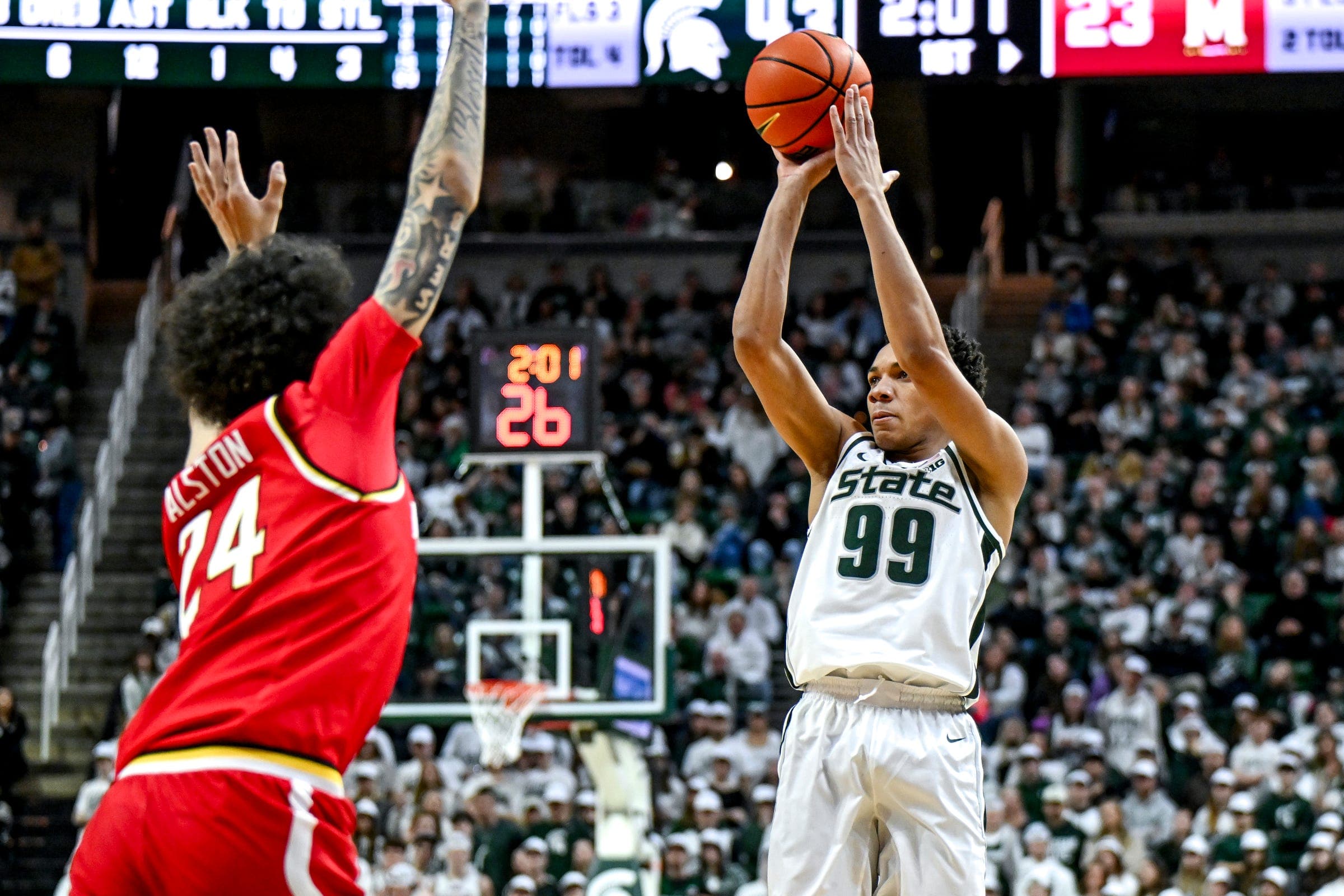
MSU wanted him back, but a crowded rotation and future-focused thinking made this a difficult, necessary step
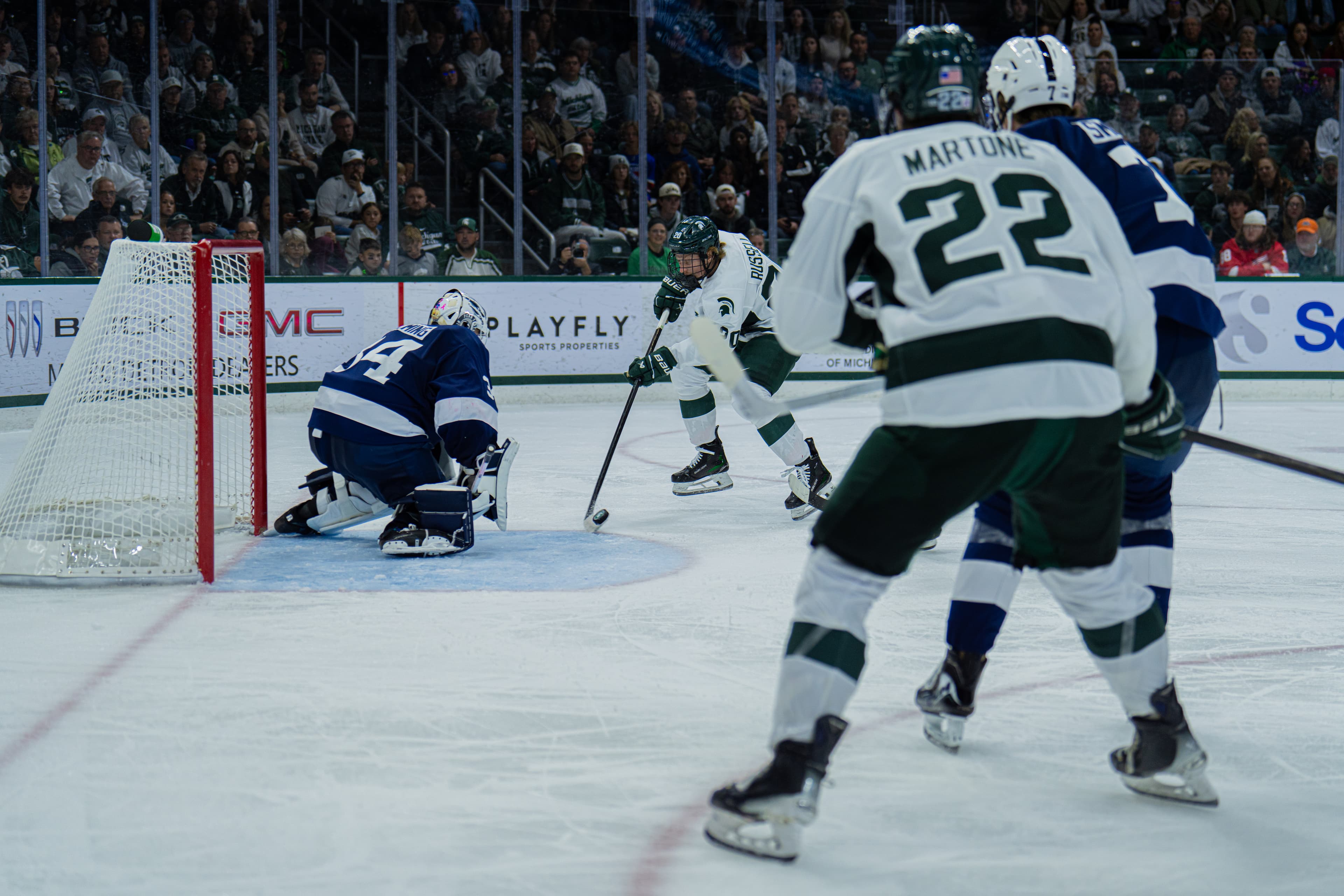
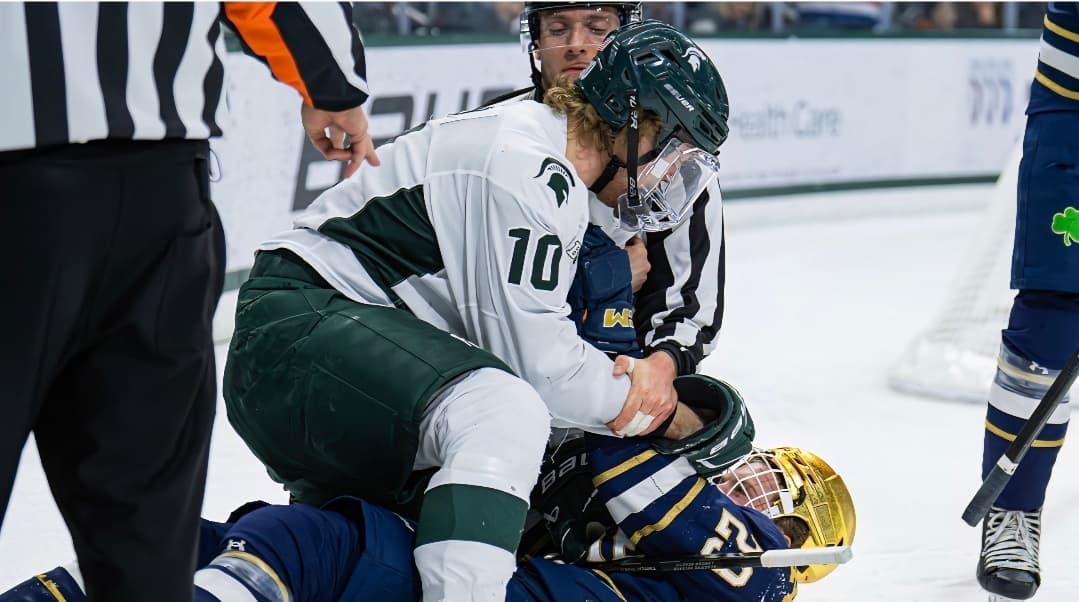
There's been a boat load of news from the Michigan State hockey program since its season ended
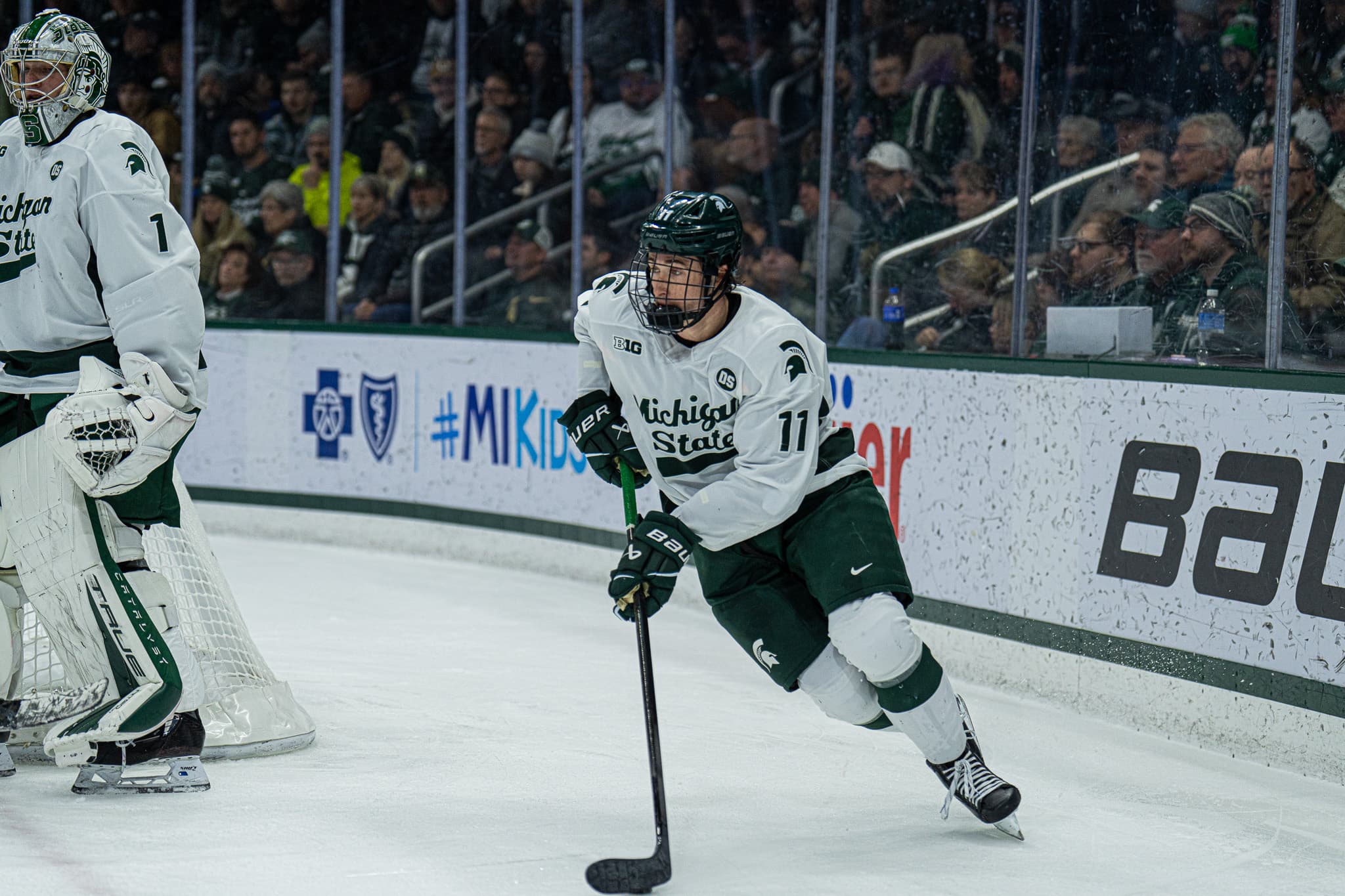
The Spartan hockey team looks to get over the hump in the NCAA Tournament
Favorable draw. Strong depth. Power play trending up. But none of it matters in a one-game format unless MSU controls possession and get the saves when it counts.
Michigan State continues to find success on the recruiting trail in the early stages of head coach Pat Fitzgerald's tenure, as class of 2027 three-star Ohio EDGE/defensive end Jack Schuler announced his commitment to the Spartans on Thursday. Schuler's commitment comes on the heels of a visit from MSU defensive coordinator Joe Rossi and defensive line coach Winston DeLattiboudere III in Ohio on Wednesday. Following the conversation between the parties, Schuler was ready to pledge to the Spartans. Michigan State offered Schuler a scholarship opportunity in February. He quickly made the the roughly four-hour trek from Columbus, Ohio to East Lansing, Michigan for a spring visit on March 21. It won't be long before Schuler returns to MSU's campus as well, as he has an official visit booked with the Spartans for the weekend of June 19 through June 21. According to the 247Sports Composite rankings, Schuler currently ranks as No. 1,034 recruit overall, No. 79 EDGE prospect and No. 39 player in the state of Ohio in the 2027 class. Looking at the Industry rankings at On3/Rivals, Schuler ranks as the No. 2,014 prospect overall, No. 180 EDGE and No. 112 player in the Buckeye State.In addition to Michigan State, Schuler has garnered scholarship offers from Connecticut, Marshall, Liberty, Central Michigan, Toledo, Ball State, Miami (OH) and Kent State.Schuler currently attends Bishop Watterson High School in Columbus, Ohio. As a junior in 2025, he helped lead the Eagles to a perfect 14-0 record and a second consecutive state championship. Schuler recorded 84 total tackles, 20 tackles for loss and nine sacks this past fall. He earned first-team All-District accolades, and was an All-State honorable mention selection. In 2024 as a sophomore, Schuler was a part of a Bishop Watterson team that went 16-0 and also won a state title. The 6-foot-5, 240-pound Schuler has some positional versatility as a strong-side defensive end or a stand-up rush end, and he could potentially play either spot once he arrives at MSU. At Michigan State, Schuler will play under Fitzgerald, Rossi, DeLattiboudere, rush ends coach Andrew Bindelglass, assistant defensive line coach Jake Chaney and the rest of the staff. With Schuler now joining the group, Michigan State's 2027 recruiting class has grown to seven total commitments as of press time, which is before official visits begin. He joins four-star defensive end Ohimai Ozolua, three-star safety Ty'ire Clark, three-star offensive tackle Jack Carlson, three-star quarterback Eli Stumpf, three-star offensive lineman Grant Adloff and three-star running back Savior Owens.

Michigan State earned a big victory on the recruiting trail on Saturday, as highly-coveted 2027 Chicago four-star defensive lineman Ohimai Ozolua announced his commitment to the Spartans on Friday. Ozolua took two consecutive visits to East Lansing earlier this spring, as he was on campus during the weekends of March 28 and April 4. He also visited MSU in January, shortly after earning a scholarship offer from the Spartans. Ozolua also has an official visit scheduled with Michigan State for the weekend of May 29 through May 31.Once he arrives at Michigan State, Ozolua will learn under head coach Pat Fitzgerald, defensive coordinator Joe Rossi, defensive line coach Winston DeLattiboudere III and the rest of the staff. MSU made it clear to the St. Rita of Cascia High School athlete that he was a top priority in the defensive trenches.“The staff and players there treat me like family,” Ozolua told Spartans Illustrated about his decision to commit to Michigan State.According to the 247Sports Composite rankings, Ozolua ranks as the No. 407 prospect nationally, No. 49 defensive lineman and No. 15 recruit in Illinois in the 2027 class. Meanwhile, the Rivals/On3 Industry rankings list Ozolua as the No. 411 overall prospect, No. 43 defensive lineman and No. 16 player in his home state. Ozolua now becomes Michigan State's highest-rated 2027 commit, and the first four-star prospect in its class. Many other programs pursued Ozolua. He has received scholarship offers from Michigan, Ohio State, Miami (FL.), Penn State, Tennessee, Illinois, Iowa, Nebraska, Missouri, Minnesota, Purdue, Wisconsin, Vanderbilt, Kansas State, Boston College and Toledo.Ozolua released a list of five finalists on March 29, which included Michigan State, Ohio State, Michigan, Tennessee and Wisconsin.He took a visit to Madison earlier this week to see the Badgers, but ultimately, Ozolua has decided to become a future Spartan. Ozolua previously told Spartans Illustrated that he was planning to take an official visit to Michigan as well. That trip to Ann Arbor will no longer take place, however, as Ozolua does not plan to visit any other schools. At the college level, Ozolua most likely projects as a strong-side defensive end, but he can be moved around. He will likely play many reps as a five-technique, but has the versatility to play in the interior of the defensive line in certain situations as well. He is considered to have a high ceiling, as Ozolua is still new to football. He played his junior season at Romeoville High School in Illinois, which was his first year of playing football in his life. He will play his senior season at St. Rita of Cascia in Chicago.Prior to playing football, the 6-foot-5, 245-pound Ozolua focused on playing basketball. He also excels in the classroom with a 3.8 grade point average. With Ozolua adding to the group, Michigan State's 2027 recruiting class has reached six total commitments as of now. He is the first defensive lineman, and second player on the defensive side of the ball, to pledge to the Spartans. Ozolua joins three-star safety Ty'ire Clark, three-star offensive tackle Jack Carlson, three-star quarterback Eli Stumpf, three-star offensive lineman Grant Adloff and three-star running back Savior Owens.

Michigan State is bolstering its wide receivers room with the addition of veteran Jackson State transfer wideout Jameel Gardner Jr. Gardner announced his pledged to the Spartans on Saturday, via Instagram, following an official visit to MSU over the weekend. Gardner was in East Lansing to watch Michigan State's "Spring Showcase," event, which served as the 15th and final spring practice for the Spartans, and was the first opportunity for fans to watch the 2026 team compete.A Detroit native, Gardner attended Cass Technical High School during his prep career. He was a three-star recruit out of high school in the class of 2022, according to 247Sports. He was a second-team All-State selection and an All-Region honoree.Gardner is represented by Autumn Seldon, CEO and founder of MET Agency Sports, LLC.Most recently, the 6-foot-1,186-pound Gardner played two seasons at the FCS level with Jackson State. In 2025, he produced 32 receptions for 483 yards (15.09 yards per reception) and two touchdowns. According to Pro Football Focus, Gardner played 699 offensive snaps for the Tigers in 2025, and recorded an offensive grade of 63.1 and a receiving grade of 63.7. He played almost exclusively on the outside, with 685 snaps coming while lined up out wide. He also played 14 snaps in the slot and two snaps on special teams last season. In total Gardner recorded 44 receptions for 628 yards (14.3 yards per catch) and three touchdowns across 22 games with Jackson State. He started his collegiate career at Kent State. After not seeing game action as a true freshman in 2022, Gardner tallied 24 receptions for 298 yards (12.4 yards per reception) and a touchdown in 2023 with the Golden Flashes.According to Seldon, Gardner was also expected to take an official visit with Kent State for a possible return there, but he will no longer make that trip. Gardner will instead play at Michigan State in 2026.Gardner will have one season of collegiate eligibility remaining. With the Spartans, Gardner will play his final year of college football under head coach Pat Fitzgerald, offensive coordinator Nick Sheridan, wide receivers coach Courtney Hawkins, assistant wide receivers coach Dom Spalding and the rest of MSU's staff.MSU's wide receivers group in 2026 includes Gardner, Chrishon McCray, Rodney Bullard (pending a waiver approval from the NCAA), KK Smith (Notre Dame transfer), Fredrick Moore (Michigan transfer), Charles Taplin, Braylon Collier, Bryson Williams, Samson Gash (true freshman), Rai'Shawn Elmore (true freshman), Zach Washington (true freshman) and others.
It has been over a month since Tom Izzo and the Michigan State Spartans were eliminated from the NCAA Tournament by the UConn Huskies in the Sweet 16. It will also be approximately six months before next year's team takes to the court again. With the commitment of Anton Bonke on April 22 and the departure of guard Divine Ugochukwu via the transfer portal, it will now likely be a quiet summer in East Lansing on the basketball front.But one thing that Spartan fans can count on is that one of the best coaches in the history of the game will once again be patrolling the sidelines next season in the Breslin Center. As summer beckons, it is a good time to look back and reflect on the amazing career - so far - of Tom Izzo.Today kicks off the first installment of a three-part series on Izzo's many achievements to date.First, we will review Izzo's dominance over the Big Ten Conference, as well as some of his raw statistics and accomplishments in the Big Dance.In part two of this series, we will take a closer look at two NCAA Tournament factors where Izzo especially shines: wins as the lower seed and wins on a two-day prep. Finally, in part three, we will dig into some more advanced NCAA Tournament performance metrics and learn exactly how unique Izzo's accomplishments are relative to expectation and relative to every coach in the modern history of the Big Dance.Big Ten DominanceTom Izzo is currently the winningest coach in the history of the Big Ten Conference. He will likely hold onto this title for the foreseeable future.As of the end of the 2026 season, he currently holds the record for both total wins at a Big Ten school (764) and total Big Ten conference wins (375).Izzo's total win count exceeds second place (Indiana legend Bob Knight, 659 wins) by over 100 wins and the next highest active coach (Matt Painter of Purdue, 501) by over 250 wins. Knight is also currently in second place in all-time Big Ten wins with 353. Painter is sitting at fourth place (251 wins) just behind his predecessor, Gene Keady (265 wins).In 2025, Izzo tied the record for the most regular season Big Ten Titles (11). Knight and Purdue's Ward Lambert (1919-1946) also both have 11 titles.Izzo also owns the record for the most Big Ten Tournament titles at six. Former Ohio State coach Thad Matta is in second place with four titles. Painter and former Wisconsin coach Bo Ryan each have three titles. NCAA Tournament PerformanceWhile Tom Izzo's dominance over Big Ten opponents is remarkable, college basketball fans across the country will always remember Izzo as "Mr. March" for his consistent excellence in the Big Dance.Going forward, note that all NCAA Tournament stats and metrics are from the current modern era of the tournament, which I define as starting in 1979. This is the first year when teams were seeded and it is was the first time the tournament included more than 32 teams. Most fans are aware of Izzo's current record of 28 consecutive NCAA Tournament appearances. Mark Few and Gonzaga are right on the Spartans' heels with 27 consecutive appearances. But the next closest active steak is Purdue with 11, thanks, in part, to the fact that Kansas and Bill Self's 2018 tournament appearance was vacated.But Izzo's March accomplishments go far beyond simple staying power.As of 2026, he has 61 NCAA Tournament wins, which places him in a three-way tie all time with former Syracuse coach Jim Boeheim and John Calipari, who has coaches at UMass, Memphis, Kentucky, and Arkansas. Only Duke legend Mike Krzyewski (101 wins) and North Carolina's Roy Williams (79) have more.Izzo's overall tournament record of 61-27 (0.693) places him clearly in the top 20 all-time in the modern era for coaches with more than two appearances.He has advanced to the Sweet 16 a total of 17 times which equates to 61% of his total tournament appearances. Izzo's 17 appearances is tied with Calipari and only behind Boeheim (19), Williams (19), and Krzyewski (26) in the modern era.Note that, since 1998, Coach K (18) is the only coach with more Sweet 16 appearances than Izzo. Furthermore, there are only eight other programs total that have more than 17 Sweet Sixteen appearances since 1979 (Duke, North Carolina, Kentucky, Kansas, Arizona, Louisville, UCLA, and Syracuse). Izzo has more Sweet 16 appearances than Washington, Minnesota, USC, Nebraska, Penn State, Rutgers, and Northwestern combined (15) since 1979.He has advanced to the Elite Eight a total of 11 times (39% of appearances). This total is tied with Self for fifth place behind current Saint John's coach Rick Pitino (12), Calipari (12), Williams (13), and Krzyewski (17). Self is the only other coach with at least 11 regional final appearances since 1998. As programs, only Duke, North Carolina, Kentucky, Kansas, and UConn have more Elite Eight appearances in the modern era than Izzo. He also has more Elite Eight appearances than half of the Big Ten combined.Izzo has been to the Final Four a total of eight times (29% of all appearances), which trails only Williams (nine) and Krzyewski (13). Only North Carolina, Duke, Kansas, and Kentucky, as programs, have more Final Fours in the modern era than Izzo. No other coach has more than seven Final Fours since 1998. Izzo also has at least twice as many Final Fours as all Big Ten teams in the modern era except UCLA, not counting vacated appearances.UP NEXT: PART TWO (coming soon)
(Authors note: This piece was originally published in late February of 2025 as a response to rumors of NCAA Basketball Tournament Expansion and specially an article from Seth Davis advocating for this expansion. As these rumors begin to swirl again, it is necessary to remind everyone once again why Davis is wrong and why expansion remains a terrible idea.)Last weekend, in what has become an annual and completely unnecessary new tradition, the NCAA Men's Basketball Tournament Selection Committee announced their current list of top four seeds for upcoming 2025 basketball tournament. On its face, this announcement was interesting, but otherwise forgettable.But as a part of revealing this potential tournament bracket, a side discussion of sorts was started. Members of the ESPN College Gameday crew provided an update on current discussions between the NCAA and conference leadership on the potential to expand the NCAA basketball tournament beyond its current scope of 68 teams to 72 or possibly 76 teams.When the topic of tournament expansion was raised during the live broadcast from Alabama's Coleman Coliseum, the fans in attendance booed loudly and in unison. Had I been present in Tuscaloosa on that day, I would have booed right along with them.I have personally made my opinion on the matter very clear over the year: the current NCAA Tournament is virtually perfect in its current form. It is the single best annual sporting event in the history of time. Messing with the format is not just a bad idea. It's a terrible idea. While the discussion of tournament expansion has come up from time to time, this time feels different. The talk seems more serious, and this is a very, very bad thing. Most concerning is that prominent members of the media are suddenly joining the call to expand the tournament. Specially, CBS Sports analysis Seth Davis wrote an article advocating for the expansion of the tournament. In the past week, Davis has been active on social media defending his position.I have always respected Mr. Davis as a basketball analyst. I believe that he is one of the best in the business. But on this topic, his opinions are misguided and not substantiated by the facts. Today, I will explain, in detail and using data, exactly why.College basketball and the NCAA Tournament are passions of mine that I have had since I was a child. As a grew older, I began to apply some of the skills that I has acquired as a engineer and research scientist to the analysis of tournament results and trends. This has provided me with a deep understanding of the statistical nature of the Tournament, which I have written about extensively in the past. I will use some of that insight to respond specifically to Davis' main points.Overview of Seth Davis' Four Main PointsIn Davis' article, he specifically refers to three reasons why the tournament should expand. Those points are:There are a lot more good teamsIt would spice up Tuesday and WednesdayThe power conferences want itBased on the introduction to the article, I would add a fourth point that Davis is using to support his thesis:The Tournament has stayed at 64 or 68 teams for too long and "The time has come for the tournament to expand again"Let's address all four of these points, but in a slightly different order."The power conferences want it"Davis buried this reason at the bottom of his article, but for me, this is the key point of the entire discussion and likely the most serious issue. The logic behind this argument also reveals how any possible expansion is likely to proceed.The key point is that power conferences are pushing for expansion, not for money (which Davis mentions several times is not the primary driver of expansion talk) but because "because they want more of their teams to play in the tournament."Moreover, Davis emphasizes the seriousness of this point by explaining that the most powerful high-major conferences could "blow up March Madness and create a tournament of their own." This comment is in reference to recent news that the power conference leadership is pushing to have more control over all Division I post season tournaments.In other words, leaders of conferences such as the Big Ten, SEC, ACC, Big 12, and Big East are demanding more teams, and if they don't get what they want, they may take their ball and go home.First, this is not a rational argument for why expansion is a good thing. It is simply an explanation of why the discussions are happening in the first place. While the true motivation may not be money, the underlying motivation is the same: greed.This attitude from the power conference is reminiscent of two very different scenarios. First, it sounds like a threat from a blackmailer or other criminal. The appropriate response is simple: don't negotiate with terrorists.But the second scenario is likely more accurate. This position reminds me of a toddler who is demanding a second piece of cake for dessert. I can easily the youngster screaming, "BUT I WANT IT NOW!" to his or her poor mother. "I want it," is also simply not a good reason. It is barely a reason at all. The solution to this problem is simple. The adults in the room need to explain to the toddlers that that can't always get what they want, especially if the thing that they want is bad for them (or others) overall.But the other key point from this part of the discussion is what is most likely to happen if the tournament does expand: more teams from the power conference are going to get in. We might see one or two additional mid major teams in a 72- or 76-team field, but the general result is that the rich are going to get richer.That is not OK."The time has come for the tournament to expand again"Davis began his article with a history lesson regarding the size of the NCAA Tournament, from the humble beginning including only conference champions, to the expansion from 40 teams in 1979, to 64 teams just six years later.The tournament added one more team in 2001 and then four in 2011 to reach the current number of 68. "It has been 40 years since the NCAA Tournament has undergone a significant expansion," Davis wrote. "The time has come for the tournament to expand again."But this statement alone has no merit. Why is a larger number better? There is obviously both a lower and an upper bound on the optimum number of teams in the field. Too few teams do not create enough access to ensure a legitimate champion. Look no further than the BCS era of college football for an example of the problems when a "tournament" is too small.But tournaments can be too large as well. From logistics point of view, there is only so much time in the schedule to accommodate so many games. Furthermore, a tournament including all 364 Division I basketball teams would be logistically ridiculous and make the regular season meaningless. Any post-season tournament should have a sense of exclusiveness. Only teams who are "worthy" should be invited to participate. That, in itself, is a philosophical question too deep to address here, but the implication is that there exists an optimum size for tournament. That size should be justified based on reason and not based on the idea that it has expanded in the past and therefore should expand in the future. That notion is nonsense.Therefore, the key question to answer is "what is the optimal size of the NCAA Basketball tournament." This is the question that Davis started to explore is his third point."There are a lot more good teams"This is the section of Davis' article that forms the logical crux of his argument. It is the section where he uses data and analogies to defend his position. It is also the section of his article where we went the most astray. Let's break down each point of his argument. Buckle up, folks. This is the part where I break out my slide rule.His first point in this section is that since 1985, the number of Division I teams in college basketball has expanded from 282 to 364. He argues that it is reasonable for the number of teams in the tournament to expand accordingly.The problem with this argument is that the expansion of Division I has exclusively occurred at the low-major level with small schools making the jump up from lower divisions. But we have already established that the additional four to eight teams added to the field would almost exclusively come from the ranks of the high-majors or at least the mid-majors. Adding teams only increases access for the existing "haves" and not the newly added "have nots" from more recent Division I expansion. This argument is not at all compelling.Davis goes on to cite the results from a report from the NCAA’s Division I Transformation Committee in 2023 that called for a participation rate of 25% in NCAA Championship of active Division I members for team sports sponsored by more than 200 schools such that the tournaments would "provide national-level competition among the best eligible student-athletes and teams."All I will say here is why is a value of 25% reasonable? Why not 20% or 30%? Furthermore, why is this value specified only for sports with more than 200 schools? If it were applied to football, the college football playoff would have to expand to over 30 teams.None of it made sense until I read that the report in question was co-authored by none other than SEC commissioner Greg Sankey, one of the loudest voices behind Tournament expansion. It seems that Mr. Sankey has attempted to legislate his agenda into NCAA policy. The only reasonable response to such a foolish gambit is to simply ignore it. It has no logical foundation and therefore holds zero value.But the heart of Davis' argument in this section revolves around the title of this section. His hypothesis is that there are more worthy teams now than there were 20 years ago and that "parity that has overwhelmed the tournament in the last 20 years."Unfortunately, neither statement is true based on a thorough evaluation of the data. His assumption of increased parity appears to be based on a combination of recency bias, a misunderstanding of statistics, and some cherry picking of the data.Direct evaluation whether teams, especially bubble teams, are better in 2024 than they were 20 years is challenging, but there are several ways to test this hypothesis.In what will be a running theme in this section, I often utilize predictive metrics, such as the tempo adjusted efficiency margin data tabulated by Ken Pomeroy, to compare teams. My justification is that "Kenpom" efficiency data correlates strongly to Vegas spread data, and Vegas spread data has a very strong correlation to the probability that a team wins or loses. I have written of this topic extensively in the past.Figure 1: Correlation between the opening Vegas point spread and the odds for the favored team to win in college basketball.If it were true that bubble teams have gotten stronger over the years, a trend should be visible in the Kenpom data for teams ranked roughly No. 40 to No. 60. One would expect those teams to be closer ranked to each other in 2024 than they were in 2004. Such as trend does not exist.As a more relatable example, it is possible to use Kenpom data to estimate the point spread for an average No. 1 seed against an average No. 11 seed as a function of time from 2002 (when Kenpom data is readily available) to the present. If the hypothesis is true that the bubble teams (the No. 11 seeds) got stronger over time, this estimated point spread should show a downward trend over time.A ran these calculations and the result is shown below in Figure 2Figure 2: Estimated point spread for an average No. 1 seed versus an average No. 11 seed from 2002 to 2024 using historical Kenpom efficiency margin data.As we can see, there is no obvious trend in this data, but there is a lot of year-to-year variance. There is no evidence that a bubble team in 2002 is any better than one in 2024.Davis goes on to provide several anecdotal pieces of evidence to support his hypothesis that parity has increased significantly over the last 20 years. There are three main examples that he cites for more parityMid major teams making the Final at a higher rateDouble-digit seeds making the Final Four as a higher rateA higher rate of big upsets, such as No. 16 and No. 15 seeds winning first round games and beyondAs for the number of mid major teams making the Final Four, Davis states "before 2006, the 1996 UMass team was the only mid-major team to make the Final Four since Indiana State in 1979." He then lists eight mid major teams who made the Final Four between 2006 and the present.If we ignore the fact that evoking the success of mid-major teams in the context of a proposal that is mostly aimed at helping high-major teams, there is still a major issue with this statement: it is not very accurate.As I look through the list of Final Four participants from 1979 on, I spotted several teams that I believe qualify as a mid-major, at least at the time. Pennsylvania (1979), UNLV (1987 and 1990), Cincinnati (1992), Utah (1998), and Marquette (2003) would all seem to qualify. Mid major participation in the Final Four has not changed significantly since 1979.As for the number of double-digit seeds making the Final Four, in order to understand if these values are usual or unusual, one must have a way to estimate the odds of these teams advancing that far in the Tournament. Fortunately, I also have developed the statistical tools needed to answer this question. Once again, I used historical Kenpom efficiency data to project potential point spreads for all possible tournament matchups. If I assume that each seed is as strong as a historically average team of that seed, it is possible to calculate the odds that each seed will win a region and advance to the Final Four. In Figure 3 below, I compare the results of this calculation to the actual number of Final Four teams of each possible seed from two different time periods: 1985 to 2003 and 2004 to 2024. Figure 3: Odds for each NCAA Tournament Seeded team to make the Final in two time frames compared to simulated results.Note that in general, the results of my calculation agree very well with actual results of the Tournament, with some notable exceptions. For example, No. 3 seeds and No. 6 have both underperformed significantly in the past 20 years.As Davis points out, No. 11 seeds have had more recent success reaching the Final Four than expected compared to the first 20 years of the 64-team era and the simulation results. In addition, No. 1 seeds had more success than expected in reaching the Final Four from 1986 to 2004. Both observations tend to support the idea of more parity in recent years.That said, Figure 2 has already demonstrated that there is nothing special about the No. 11 seeds over the past 20 years. There is no evidence that teams that far down the seed list are more talented or capable of beating a No. 1 seed than they were in 2002. But what Figure 2 does highlight is the potential variance in the relative strength of different seeds over the years. This is not a trend, it is simply the result of the natural randomness of the Tournament and sports in general.From this point of view, the overrepresentation of No. 11 seeds in recent Final Fours is simply a minor statistical anomaly. It is no more or less significant than the fact that a No. 6 seed hasn't made the Final Four since 1992.But just making the Final Four in just one parameter. As an additional counterpoint to the success of No. 11 seeds in reaching the Final Four recently, I would be remiss if I did not point out that the lowest seed to ever win the National Title since the introduction of seeding in 1979 was No. 8 seed Villanova, who did so in 1985.Furthermore, two of the next three lowest seeds to ever win the Tournament were a pair of No. 6 seeds in 1983 (N.C. State) and in 1988 (Kansas). No. 7 UConn in 2014 in the only team seeded lower than No. 4 to win the Tournament since the late 1980s.Davis' final point about the apparent sudden appearance of shocking upsets such as a pair of No. 16 teams beating No. 1 seeds twice in the last seven years lead me to another important insight that I have gained in my extensive study of the NCAA Tournament. The frequency of upsets in the NCAA Tournament is completely predictable based on an analysis of typical point spreads in any arbitrary college basketball game, whether it occurs in March or not.For example, the average point spread for a first-round game between a No. 3 seed and a No. 14 seed is about 11 points. College basketball teams which are 11-point favorites, no matter when the game is played, win straight up about 86% of time. In NCAA Tournament play, No. 3 seeds have a record of 133-23 (85.3%) against No. 14 seeds.The math checks out basically every time. This is why it is possible to simulate the possible results of the NCAA Tournament in way that provides statistics and trends that match reality, such as Figure 2.So when it comes to No. 1 seeds versus a No. 16 seed, the average point spread is around 24.5 points. This corresponds to a winning percentage of almost exactly 99%. Thus, in NCAA Tournament play, we should expect to see a No. 16 seed beat a No. 1 seed roughly once in 100 tries, or once every 25 years. With No. 16 seeds first making an appearance in 1985, the first No. 16 seed upset was not to be expected until around 2010. It arrived a few years late in 2018. The second No. 16 upset was most likely to occur sometime between 2010 and 2035. It arrived a little ahead of schedule in 2023.When it comes to low probability events, this type of occurrence is not a huge surprise. It is well within normal variance.As for No. 2 seeds versus No. 15 seeds, the point spreads suggest that a No. 15 seed should prevail about 5% of the time or once every five years or so. The first win by a No. 15 seed happened in 1991, seven years after the introduction of No. 15 seeds and therefore just two years later than expected. The second No. 15 seed upset happened two years later in 1993, and the third happened in 1997. Over the first 20 years of the expanded tournament, a No. 2 seed lost four times, exactly as expected.Extending this analysis beyond a simple exploration of No. 15 and No. 16 seeds, it is possible to conduct a more comprehensive analysis on the frequency of common tournament upsets as a function of time and as a function of the expected frequency. Figure 4 below shows this comparison for the 20 most common seed pairings in Tournament history, divided in the first and second 20-years periods of the expanded NCAA Tournament.Figure 4: Comparison of the actual upset rates for the 1985-2003 timeframe and the 2004-2023 timeframe to the expected upset rate extracted from the projected point spreads.In this figure the blue circles represent that data from 1985 to 2003 while the green diamonds represent the data from the last 20 years. If the hypothesis were true that there has been more parity recently, we would expect to see the green diamonds mostly appearing in the bottom half of the graph and the blue circles mostly appearing towards that top. While that is true for some of the seed pairings, it does not appear to be a general trend.For example, it is true that the frequency of No. 16 and No. 15 upsets has modestly increased in the last 20 years. No. 12 seeds and No. 11 seeds have also fared better recently in first-round action. In second-round action, No. 7 seeds have more frequently beaten No. 2 seeds and No. 11 seeds have racked up more wins over No. 3 seeds in the last 20 years than in the previous 20 years.But for all those examples of lower seeds performing better in the near term, there is an almost equal set of counter examples where underdogs performed better prior to 2003. For example, No. 14 seeds had more upset wins in the first 20 years of the expanded tournament, as did No. 9 seeds over No. 8 seeds.This pattern is more prevalent in later tournament rounds. For example, No. 10 seeds used to fare much better in second round games against No. 10 seeds, as did No. 12 seeds against No. 4 seeds. The first 20 years of the Tournament also saw far more upsets of No. 6 seeds over No. 3 seeds and No. 4 seeds over No. 1 seeds in the Sweet 16.In general, Figure 3 shows no clear signs of a "overwhelming amount of parity" over the past 20 years. There are signs of statistical variation, which is completely expected, but not a overall trend of more upsets or parity in recent year.That said, there is a potential explanation for the modest increase in upset rates for the No. 15 and No. 16 seeds since 2011. When the NCAA expanded the tournament to 68 teams and instituted the First Four, it resulted in a slight increase in the difficultly of the first-round games for roughly the top four or five seeds in each region.Starting in 2011, the lowest four teams in the entire tournament played in the First Four. This means that the remaining two No. 16 seeds would have been placed on the No. 15 seed line in 2010. Similarly, half of the No. 15 seeds would have been No. 14 seeds in previous tournaments. Practically, this resulted in a subtle tightening of the point spreads (and therefore an increase in the odds of an upset) for all the top seeds.This effect certainly could give the appearance of more parity, but it is not because "there are a lot more good teams." It is because the structure of the tournament fundamentally changed in a way that impacted the probabilities.In my final rebuttal of this third point, I believe that there is a way to mathematically calculate one parameter that captures the overall parity of a given tournament. This value is equal to the geometric mean of the winner's odds in each individual tournament game. I have also written about this extensively elsewhere. This "parity parameter" is lower if a tournament has a lot of low probability results (such as big upsets) and it is higher when the favored teams generally win. The parameter correlates to the total number of upsets in a given tournament, weighed by the "severity" of those upsets. (It is also mathematically related to the odds to correctly predict a prefect bracket, but that is a story for another day.)If it is true that the parity of March Madness has increased over the past 20 years, my parity parameter should show a downward trend. Figure 5 shows the results of this calculation, going back to 1979 where point spreads are approximated in the time prior to 2002.Figure 5: The Parity Parameter tabulated for every NCAA Tournament from 1979 to 2024. Lower values correspond to more upsets and more parity.In general, Figure 4 does not support the hypothesis of a clear trend of increasing parity over the past 20 years. The 40-year trend is best explained as follows. Parity and chaos reigned in the first few years of the tournament, but the madness gradually subsided over the first 15 years to reach a relatively low point in parity in the mid-1990s. Parity increased slightly and then was relatively stable until 2007, which was the first of three consecutive years of some of the lowest parity observed in Tournament history. This includes the only year when all four No. 1 seeds advanced to the Final Four (in 2008).The Tournament got a bit more chaotic starting in 2010 and parity increased through the 2014 tournament, punctuated with No. 7 seed UConn claiming the National Title. The next five years alternated between high parity and low parity all the way up to the lost COVID year of 2020.The three post-COVID tournaments of 2021, 2022, and 2023 all had relatively high levels big upsets, which likely in the cause of the some of the recency bias present in Davis' analysis. But in 2024, a relatively low level of parity returned. Furthermore, the value of the Parity Parameter for the 2025 tournament is 66.1%. This is the highest value in recorded history.Based on all of the data presented above, I am confident that we can reject the hypothesis that the last 20 years has been filled with parity due to in influx of a lot more better teams. This idea is not a justification in any way for tournament expansion."It would spice up Tuesday and Wednesday"The final point in Davis' article is that an increased number of games in a supersized First Four, mostly likely on the Tuesday and Wednesday after Selection Sunday, would be more fun. If some basketball is good, then more basketball must be better.I beg to differ.To expand on Seth's food analogy, a delicious dish, more than anything, has balance. The perfect chili recipe has the optimal blend of meat, beans, tomatoes, garlic, and chili pepper. While there is no accounting for taste, adding a half dozen ghost peppers to the pot will likely make it inedible.The NCAA Tournament, in its current form, also has perfect balance. The first two days of the Tournament is wall-to-wall action, often filled buzzer beaters and a few unexpected upsets as David takes down Goliath. As the Tournament rolls on, Cinderella is eventually shown the door, and the stronger teams that survive battle for the ultimate prize over the next five rounds and three weekends.The NCAA Tournament, in its current form, provides access to all Division I teams (through conference tournaments) but also includes pretty much any team with a reasonable statistical chance to win it all through the at-large bid process.From a simple scheduling point of view, there is no need to "spice up" Tuesday and Wednesday. Quite honestly, us fans could use the break.As a passionate college basketball fan, I watch many of the conference tournament games in the week prior to Selection Sunday. The build up to the release of the bracket is perhaps the most exciting time of the entire year for me. As for the Tournament itself, I have taken paid leave every single year of my professional career, without exception, to watch as much of the first-round action on Thursday and Friday as possible. Unless absolutely necessary, I don't leave the couch until late Sunday night.It's glorious, and I am far from alone in this tradition.But to be honest, I do not carve out time to consistently watch the First Four. If an expanded tournament calls for games to be played during the work day on Tuesday and Wednesday, that is even too much for me. It would especially be too much if those games mostly include a pair of low-major "Davids" fighting just to reach the "real" Tournament or mediocre high-major conference teams that don't deserve to be in the tournament anyway.If this is my stance and feeling about an expanded First Four, the response from more casual fans is likely to be even worse. It will be apathy.After the drama and excitement of the conference tournaments and Selection Sunday, I prefer to spend the next few days in peaceful reflection with the bracket. It would also be great it that bracket contained a minimal number of the "either/or" options that the play-ins games create. Those only cause confusion and frustration in the ubiquitous cultural phenomenon known as the "office pool." No, we do not need more basketball between Selection Sunday and Thursday. Those three days provide a much-needed calm before the exhilarating storm that arrives on Thursday at noon. If anything, the Tournament needs fewer play-in games, not more.What is the Optimal Size of the Tournament?Based on the thorough analysis above, I have presented what I believe to be a convincing argument as to why there is no need to expand the NCAA Tournament. But this begs the question as to what is the best number of teams to include in the bracket?As stated above, the ideal tournament should provide broad access to the full Division I field and it should also contain all the teams with a reasonable shot to win the tournament. The automatic bid process through conference tournament champions handles the first issue easily. This currently accounts for 31 automatic bids. But how many at-large bids are needed?We can look at this from a couple points of view. As a general rule, I propose that if a team cannot finish over .500 in conference play, they likely are not worthy of playing in the NCAA Tournament. This is the very definition of high-major conference mediocrity.There are certainly exceptions to this rule. This year conferences such as the SEC are strong enough that perhaps 13 of the full 18-team membership are deserving of a bid. But conferences such as the ACC may only deserve five teams. As a whole, a reasonable rule of thumb is that the Tournament should contain no more than half of the at-large candidates from the five major conferences (the Big Ten, Big 12, SEC, ACC, and Big East). The current combined membership of those five conferences is 79 teams. Five of those teams receive automatic bids. This leaves 74 at-large candidates. If a maximum of 50% of those team received at-large bid, that is 37 teams. If we add that to the number automatic qualifiers, we arrive at the maximum reasonable size of the NCAA Tournament field:68 teams. Bingo.My proposal is that this number of at-large high-major teams (37) becomes a hard cap for the Selection Committee. The Committee can and certainly should select fewer than 37 high-major at large teams to make space for worthy mid-major teams that did not win their conference tournament.Furthermore, any further expansion of the NCAA Tournament should keep this concept of a hard cap in place. If the Tournament were to expand in the future (which we have already established in an objectively terrible idea) that expansion should only include mid-major teams. That is the only remotely acceptable option. It is in line with the idea that an expanded field of Division I teams has exclusively occurred outside of the high-majors conferences. It is also in alignment with what should be the spirit NCAA’s Division I Transformation Committee's 25% guideline, even if the true intensions of its co-author were far from pure.That said, there are also logical reasons why even a 68-team field is too large. As stated above, any at-large team added to the field should have a reasonable probability to win the Tournament. Despite the apparent magic of the No. 11 First Four teams over the past few years, all data suggests that the farther one goes down the seed list, the lower the odds to win the National Title.But what is a reasonable probability? I would propose the cutoff should be the point on the seed line where there is a 99% chance that a team above the line will win the tournament. Using the same methodology outlined above, I have calculated the cutoff line in each year back to 2002.That number fluctuates over the years, but the average bracket suggests that it includes only the top 36 teams in the field or in other words, the top nine seeds only. If we expand the criteria to include only teams with a combined 99.5% chance to win the Tournament, the cutoff line moves down four slots to include the No. 10 seeds as well. Despite the fact that five No. 11 seeds have made the Final Four four times since 2006, the odds suggest that around 200 Tournaments would have to be played before an No. 11 or lower would actually win the whole thing.This analysis suggests that the hard cap of 37 at-large high major teams is already too high. A number in the low 30s would provide plenty of access to any high-major team with a mathematically reasonable chance to win the National Title.If I put all this analysis together, the actual perfect size of the NCAA Tournament has been staring us in the face this whole time. The leadership of the NCAA figured it out back in 1985. The perfect size of the tournament is exactly 64 teams, with a potential hard cap of the number high major teams to encourage the Selection Committee to include a few strong mid-major teams that failed to win their conference tournament.Some might argue that there is nothing special about the number 64, but that is simply not true. The number 64 is a multiple of two. A 64-team tournament has no play-in games such that the potential path of each team contains the same number of games. Eliminating the play-in games would once again allow all conference champions to play in the real Big Dance instead of sending two of them home on Tuesday and Wednesday night. Those kids deserve a chance to play in the real first round. Taking that chance away from them in 2011 was disrespectful at best and despicable at worst.A 64-team bracket has the same symmetric beauty as the face of a super model. It's the perfect answer.Some might argue that I simply fear change and want things to go back to the "good old days." But I just spent 6,000 words telling why I am right. Besides, the NCAA has attempted to make changes to the Tournament before that have not worked out. Does anyone remember the period when the NCAA named the four Regions after cities instead of the traditional cardinal directions? How about the era after the introduction of the First Four where the NCAA insisted on calling the games on Thursday and Friday "the second round?"Those were both bad, unpopular ideas and NCAA eventually acquiesced to put things back the way that they were. Both were simply window dressing. Tournament expansion is far more serious, far more unpopular, and an objectively far worse idea.The Single Biggest Reason Not to ExpandWith all those words spent on why the Tournament should not expand (and if anything should contract) I have only touched on the signal biggest reason not to expand the NCAA Tournament.Fans absolutely hate the idea.The ESPN GameDay Crew got a taste in Tuscaloosa of the vitriol that fans have for expansion. The response to the proposal through the week on social media has been overwhelmingly negative.The argument has been made that fans will simply "get over it" and will still watch the games. Maybe. I have already explained how more games on Tuesday and Wednesday are unlikely to draw that much interest from either hard-core or casual fans. If an expanded tournament were to push more mid-major teams into the play-in games, that could reduce the magic in the first two rounds of the tournament as well. If we combine a more exhausting schedule, a less interesting opening weekend, and a more complicated office pool bracket with fans growing disenchantment with concepts such as NIL and the transfer portal, it could be a very, very dangerous combination. Like it or not, all of these billions of dollars that the NCAA Tournament generates come from advertising dollars. Advertising dollars are dependent on the number of eyeballs watching these games. College basketball fans are the customers in this endeavor. Fans hate the concept of expansion. The customer is always right.The Adults in the RoomSo what happens next? Over the next few months, my understanding is that members of NCAA leadership and the media broadcast partners (CBS/Paramount) will hash out a deal to either expand the tournament or not.I have presented my case as to why no changes are needed to the Tournament. At the beginning of this piece, I mentioned how there needs to be an adult in the room to tell Greg Sankey and his cronies that just because they want something does not make it a good idea. Those adults in the room need to be the executives of the media broadcast companies. To close, I would like to speak directly to them.The NCAA Basketball Tournament in its current form is close to perfect. There is no logical reason to expand the tournament field other than the greed of the high-major power conferences. Expansion of the Tournament add little or no value but it does present a real risk to the ongoing popularity of the event. When it comes to the NCAA Tournament it is the goose that lays the golden egg. It seems like some people are advocating that the goose should be fattened up if not force fed because duck meat and pate might be tasty. We all know how that story ends.The correct choice could not be clearer. Just say no to NCAA Tournament expansion. America will thank you.
After a quiet summer and fall, dark clouds are once again forming near the horizon of the college basketball world. Certain perceived power brokers are once again discussing the possibility to expand the NCAA Men's Basketball Tournament.I have made my personal opinions on this matter crystal clear: it is an objectively terrible idea. Any person in a decision-making role who advocates for such expansion should be publicly and repeated ridiculed until forced out of the sport. I have written previously about the many reasons why expansion is such a bad idea. Briefly, there is no evidence to support the idea that the current format does not allow in enough worthy teams. Instead, expansion will almost exclusively benefit unworthy, mediocre high-major teams at the expense of mid- and low-major teams. Expansion also will disrupt the current schedule and popular activities such as office pools. This very likely will impact fans enjoyment of the tournament. To this end, in a world where people can barely agree on the color of the sky, expansion is a concept that is perhaps nearly universally despised by many college basketball fans. It is not apocryphal to suggest that expansion could eventually decrease viewership, costing television networks billions of dollars. Did that get your attention CBS/Paramount Executives?But the complete lack of merit for expansion it not the purpose of today's contribution. Instead, I would like to analyze the likely result of the proposed expansion, if it were to happen.The 76-Team ProposalIn the spring of 2025, the expansion discussion centered around a possible expansion of the current 68-team field to 72 teams. The four additional teams would be drawn from the pool of "at-large" teams that did not receive an automatic to the NCAA Tournament as a result of winning a conference tournament.The addition of four teams on wrong side of the current NCAA bubble would result in the addition of four additional mid-week "play-in" games prior to the traditional start of first round of the NCAA Tournament on Thursday that for mathematical and logistical simplicity almost must have exactly 64 teams.Back in the spring, no decision was made regarding expansion. Surprisingly, when rumors of expansion resurfaced this fall, the proposed expansion had ballooned to 76 teams. In this new proposal, 24 teams of the 76-member field would need to start play mid-week in order to pare the field down to 64 teams by Thursday. This means that a total of 12 games would need to be played on the Tuesday and Wednesday between Selection Sunday and the start of the first round on Thursday.In principle, these 12 games could be played at three different sites on Tuesday and Wednesday in the evening. Three games could be played in parallel on three different networks or streaming platforms. However, the proposals that I have seen suggest that only two sites will be used, which necessarily means that likely four of the 12 games would be played in the afternoon on that Tuesday and Wednesday. Serious basketball fans already spent time following afternoon conference tournament games the week prior. Many serious fans (myself included) take time off of work to watch first round NCAA Tournament games on Thursday and Friday. These same fans will almost certainly not make time to watch the new play-in round Tuesday/Wednesday games. Viewership could be terrible.Furthermore, the existence of 12 total play-in games means that 12 of the 64 slots in a standard office pool bracket (almost 20%) would contain an "either/or" pair of teams. The presence of just four of these slots in the current format already causes significant confusion and frustration with casual fans. The 76-team proposal would triple this negative impact.Which New Teams Would Get In?As mentioned above, an expansion to 76 teams would allow eight additional teams to play in the tournament, which otherwise would have not have made the field. What would the profile of these additional teams likely look like?NCAA Tournament Selection and seeding is a highly controversial subject, so it is impossible to know for sure. But if we use the 2025 NCAA Tournament candidate field as a reference, we can get an idea of which teams would have been added.Based on the available metrics, such as the NET, Kenpom efficiency, and my personal seeding algorithm, here is a list of the most likely additional teams, if the 2025 NCAA Tournament would have expanded by eight slots:Indiana: 19-13, No. 9 in Big Ten (10-11), lost to No. 8 Oregon in Big Ten TournamentWest Virginia: 19-13, No. 8 in Big 12 (11-11), lost to No. 16 Colorado in Big 12 TournamentOhio State: 17-15, No 10 in Big Ten (9-12), lost to No. 15 Iowa in Big Ten TournamentBoise State: 24-10, No. 5 in the Mountain West (16-7), lost to No. 1 New Mexico in Mountain West TournamentSMU: 23-10, No. 6 in the ACC (14-8), lost to No. 3 Clemson in ACC TournamentSan Francisco: 24-9, No. 3 in the West Coast Conference (14-6), lost to No. 1 Gonzaga in the WCC TournamentWake Forest: 21-11. No. 4 in the ACC (13-8), lost to No. 5 North Carolina in ACC TournamentUC Irvine: 28-6, No. 2 in the Big West (18-4), lost to No. 1 UC San Diego in the Big West TournamentNebraska: 17-14, No. 16 in the Big Ten (7-13), did not qualify for the Big Ten TournamentNorthwestern: 17-16, No. 13 in Big Ten (8-14), lost to No. 5 Wisconsin in Big Ten TournamentCincinnati: 18-15, No. 13 in the Big 12, (8-14), lost to No. 5 Iowa State in Big 12 TournamentVillanova: 19-14, No. 6 in the Big East (12-10), lost to No. 3 UConn in Big East TournamentEight of the 12 teams above would have made the NCAA Tournament. Six of the 12 teams finished at or below .500 in conference play. Seven of the 12 teams finished with at least 13 losses. The two ACC teams (SMU and Wake Forest) combined for just two "Quad One" wins and both had strengths of schedules outside of the top 50.The list does contain a total of three mid-major teams: Boise State, San Francisco and UC Irvine. The addition of these potential Cinderella teams into the bracket is one of the few potentially compelling arguments for expansion.But, let's be serious. The stated purpose of expansion from conference leaders such as SEC Commissioner Greg Sankey and Big Ten Commissioner Tony Petitti is to get more of their teams into the tournament. Can we honestly believe that more that one of the mid-majors above would have been included in this theoretically expanded field? I think not.Seeding ImplicationsThe general structure of a hypothetical 76-team NCAA Tournament was described above, but there are some additional subtleties in how this proposed tournament would be constructed. It is certain that 24 teams would need to play in 12 games prior to the first round of the tournament.But which teams from the field of 76 would play in the expanded play-in round and how would the winning teams be incorporated into the main bracket?There are several ways in which this could be accomplished, but two possible strategies have been outlined in the discussion last fall.The most likely strategy was shared by Ross Dellenger on the On3 network last October. Half of the 12 play-in games would involve the 12 lowest-ranked teams in the tournament. This pool of teams are exclusively made up from conference champions of mid- and low-major conferences. In the current format, only four teams from this pool are forced to participate in the play-in round. The new proposal triples that number.The other half of the 12 play-in games would be filled by the 12 lowest-ranked at-large teams. Basically all eight of the newly added teams would participate in the play-in round, along with the four teams that currently participate in the play-in games. Note that prior to 2010, only one of those 12 teams (the highest ranked) would have qualified for the NCAA Tournament at all.But Big Ten Commissioner Tony Petitti unveiled a new idea last fall at Big Ten Basketball Media Day. He suggested an alternative model based on what he referred to as "straight seeding." His proposal is that the 24 lowest-ranked teams in the NCAA Tournament would all be moved into the play-in round. This group would include almost all of the automatic qualifiers from the mid- and low-major conferences.In this scenario, the majority of the newly-added bubble teams that previously would not have qualified for the NCAA Tournament would instead be placed directly in the main portion of the tournament bracket in the first round games played on either Thursday or Friday.Both 76-team proposals would result in a major shift in the way the NCAA Tournament is constructed.The biggest impact would be a general compression and shift of the teams seeded No. 13 and below. In the mostly plausible scenario, all of the current No. 16 seeds and half of the current No. 15 seeds would shift into No. 16 play-in games. All of the current No. 14 seeds would morph into teams playing for the two remaining No. 15 seeds. All of the current No. 13 seeds would become No. 14 seeds.Last March, No. 13 McNeese State upset No. 4 Clemson in the first round. In the expanded Tournament, McNeese State would have been a No. 14 seed.No. 15 seed Bryant pushed No. 2 Michigan State in the first round. Bryant would slide to a No. 16 seed as well.In Petitti's more aggressive reseeding proposal, this shift and compression is even more extreme. Up to 12 additional mid-major teams would effectively be shifted down the bracket. All four No. 14 seeds, No. 15 seeds and No. 16 seeds in the main bracket would originate in a play-in game.A dangerous team such as McNeese State would have wound up in a No. 14 seed play-in game rather than as a No. 12 seed. A team such as Grand Canyon would have played in a No. 15 seed play-in game rather than as a No. 13 seed.The full pool of No. 12 seeds and No. 13 seeds would almost entirely be composed of teams that previously would not have qualified to make the Tournament at all. Quantifying the MadnessThe analysis above provides a qualitative look at the impact of possible NCAA Tournament analysis. These changes will also have a significant impact on the very nature of the tournament in ways that cannot be measured qualitatively. In order to clarify the more tangible impacts of expansion, I developed a more precise method to simulate the results of the NCAA Men's Basketball Tournament in each of the scenarios described above.I used historical Kenpom Efficiency margin data and the lists of fully ranked seed lines from the NCAA Selection Committee back to 2011 and developed a correlation between the two data sets. That correlation is shown below in Figure 1.Figure 1: Correlation between average Kenpom Efficiency Margins and the published seed line position (No. 1 to No. 68) for the NCAA Tournaments from 2011 to 2025With this correlation in hand, it is trivial to set up a set of NCAA Tournament brackets where the participants represent perfectly average teams seeded in a perfect way.The seed list is the perfected ordered with the best team in the NCAA Tournament as the No. 1 overall seed all the way down to the worst team in the tournament at the bottom of the list, which contains 64, 65, 68, 72 or 76 teams. Seeding also follows a perfect "s-curve" where at every round of the tournament, the best team faces the worst remaining team, the second-best team faces the second-worst team, and so on, assuming the favored team wins every game.Using this mathematical model, Kenpom data can be used to calculate the odds for the favored team to win any possible NCAA Tournament matchup. The odds for various tournament outcomes can then be compared between any of the past and proposed tournament scenarios.This set of calculations produces a ton of data that reveals a great deal about the impact of potential NCAA Tournament expansion. Figure 2 shows the impact of expansion on first-round upset rate when five different tournament structures are considered. For reference, the data points show the observed upset rate for the 1985 to 2025 tournaments.Figure 2: Calculated first round upset rate for six different tournament structures (solid lines). The data points (circles) represent the actual upset rate from 1985 through 2025.The Figure above highlights some basic rules of thumb that hardcore "March Madness" nerds know well. No. 1 seeds and No. 2 seeds both win over 90% of the time. No. 3 and No. 4 seeds win over 80% of the time. No. 5 seeds and higher experience upsets much more frequently.Note that the actual upset frequencies agree well with the model predictions, which some variation No. 5 seed and No. 8 seed get upset more frequently than expected. No. 7 seeds have historically avoided upsets more than expected.This type of variance is completely expected. The model assumes a highly idealized version of the real tournament bracket. But the predicted trends in upset frequencies for the expanded tournament are interesting.As Figure 2 shows, the modest expansion from 64 to 65 and finally to 68 teams is projected to have a small impact on upset rates. This impact is on the order of two or three percentage points at the most and it is fairly consistent from No. 1 seeds down to No. 6 seeds.If the tournament were expand to 72 or 76 team is expected to result in a significant increase in first round upsets. The magnitude of this impact is five to 10 percentage points. It is especially significant for the No. 3 and the No. 4 seeds.Expansion will not impact seeds No. 7 to No. 10. Teams in this range will essentially play exactly the same teams in a 72- or 76-team tournament than they would in a 64-team field.Another way to look at the data presented in Figure 2 is from the point of view of the number of years between first-round upsets of various seeds. Figure 3 gives the predicted number of years in between "major" upsets involving No. 1 to No. 5 seeds.Figure 3: The predicted number of years between major first round upsets (seeds No. 1 to No. 5) in each of the six highlighted NCAA Tournament configurations.One interesting note is that when the NCAA Tournament expanded to 68 teams in 2011, there was a significant jump in the expected upset rate of the top seeds. No. 1 seeds went from an expected upset rate of once about every 21 years to once in 14.5 years. In the proposed expansions beyond the current 68-team format, that rate is expected to increase to once in 12.6 years. This is due to completely to the fact that adding additional play-in games to the bottom of the bracket increases the average strength of the No. 16 seeds.The impact to the No. 2 seeds is even more significant. In the 64- and 68-team brackets, No. 2 seeds are expected to lose about once in 4.5 to six years. If the NCAA Tournament is expanded to 72 or 75 teams, that rate will almost double to once every 2.5 to 3.5 years.For No. 3 seeds, the upset rate is expected to increase to more often than every other year. An expanded tournament would also result in about one No. 4 seed upset each year and more than one No. 5 seed upset per year.This change in first-round upset rates has a longer range impact. If No. 2, No. 3, No. 4 and No. 5 seeds are upset more often, teams on those seed lines will generally have less success in March than in a smaller tournament. But the impact is not just limited to team on those seed line. Other teams on the bracket will actually have better odds to advance. If more No. 2 or No. 3 seeds get upset in the first round, the paths for No. 6 and No. 7 seeds (which would face those highly-ranked team in the second round) get easier. Figure 4 below visualized the predicted change in Final Four participation for seeds No. 1 to No. 10 under a 72- and the two versions of 76-team expanded tournaments.Figure 4: Change in the number of Final Four teams on each seed line for the proposed 72- and 76-team tournaments compared to the 64-team baseline.Tournament expansion to 72 or more teams will very likely result is a subtle shift in Final Four participation and overall March success across the board in ways that are not expected.No. 1 seeds will actually benefit from expansion. While the upset rate of No. 1 seeds will tick up, the tops seeds are still expected to win 98% of all first-round games going forward. This small increase in attrition is offset by a larger upset rate for the No. 2 to No. 5 seeds.As Figure 4 shows, Final Four participation among No. 2 to No 5 seeds is expected to drop by up to 10%. No. 3 seeds will be hit the hardest. When fewer No. 2 and No. 3 seeds advance, the path to the Final Four for No. 1 seeds gets easier.Teams located in the middle of the bracket and seeded No. 6 to No. 10 will also see a small benefit as the higher seeded teams are upset more frequently. No. 7 seeds are expected to make the Final Four 10% more often in the extreme case.That said, the odds of a No. 7 seed (for example) making the Final Four will remain slim. In the 64-team bracket, a No. 7 seed has a 2.4% chance to make the Final Four (i.e. about one appearance every 10.6 years). In the 76-team brackets, those odds increase to 2.6% (i.e. one appearance every 9.4 years).Add it UpIf the powers that be make the awful decision to expand the NCAA Tournament, fans can expect a few changes, both overt and subtle to the way "March Madness" plays out.More obviously, a larger percentage of low- and mid-major teams will be pushed into play-in games. Half of these potential Cinderella teams will be eliminated before the start of the first round on Thursday afternoon. But those teams that do survive the play-in games will be a bigger test for the high seeds that they do end up facing in the first round. The total number of first-round upsets will increase by about one per year (7.6 to 8.7 or slightly higher in the Big Ten proposal).This increase in upsets will mostly impact teams seeded No. 2 to No. 5 and as a result, these teams will see a slight decrease in Final Four participation and overall Tournament success. Conversely, No. 1 seeds and teams seeded No. 6 and lower will benefit from this subtle change and see a slight increase in Final Four participation and overall NCAA Tournament success.
Some initial thoughts on what Sheridan's offense might bring to MSU
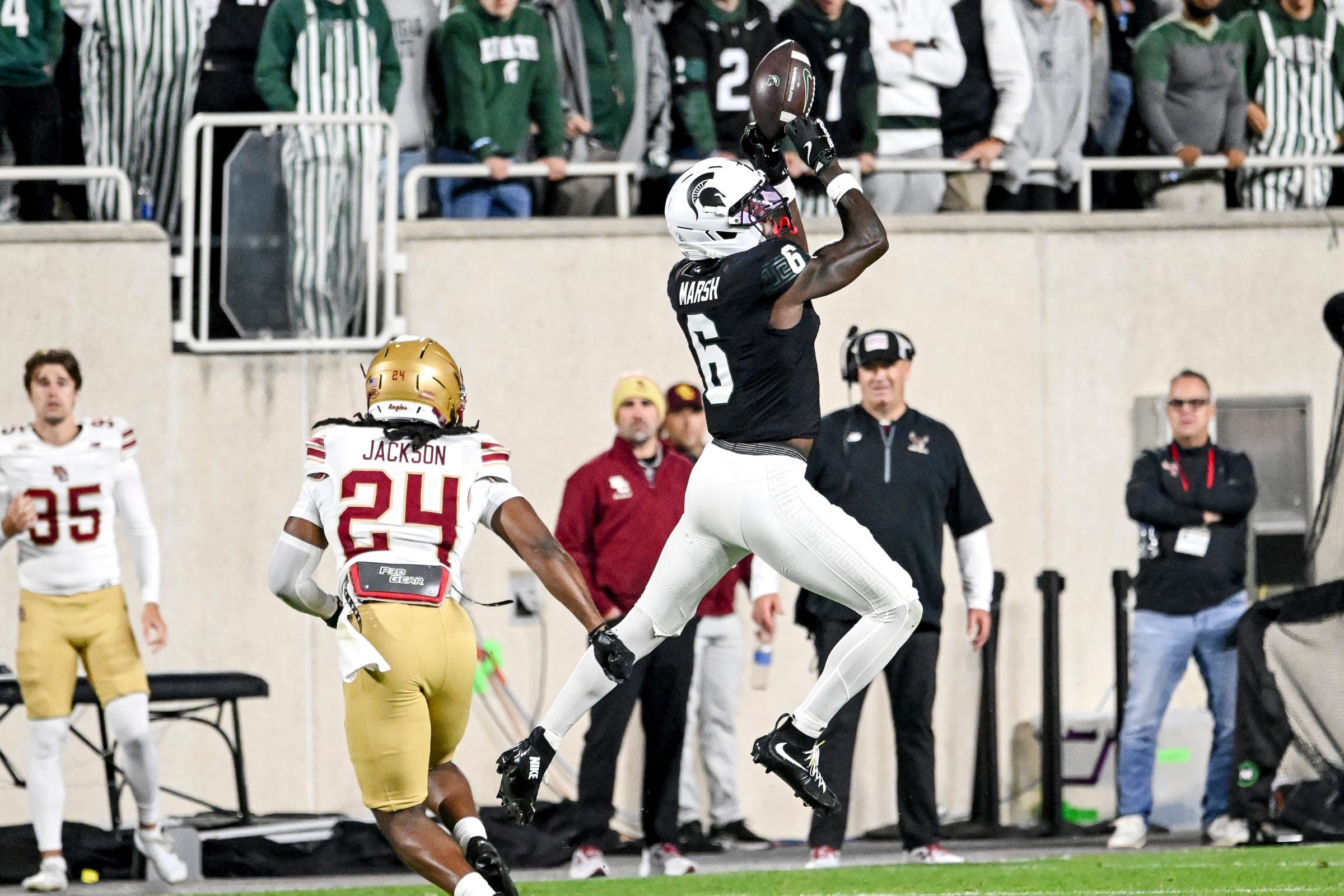
The ins and outs of a critical, much needed win for the Spartans over the Eagles in double overtime.
The Spartans are trying to hold on to the last spot in the Big Ten Tournament in Omaha
The Spartans remain in search of traction as they approach the heart of conference play
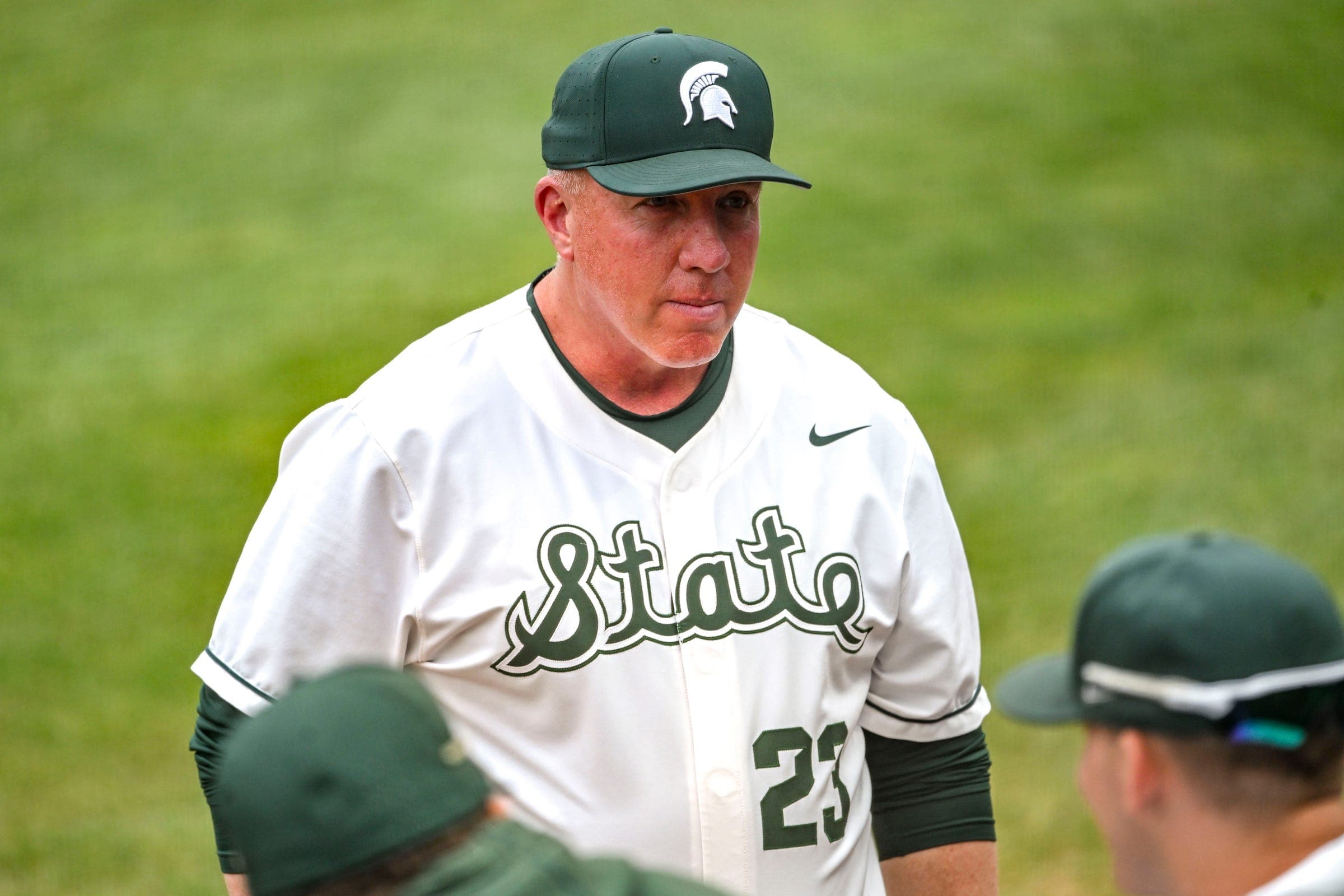
Yet again, it wasn't a weekend full of highlights for Jake Boss Jr’s Michigan State squad, as the Spartans fell to 3-11 after a sweep from the Nebraska Cornhuskers. The Spartans have only had one victory (Albany) since the opening Louisville series. The pitching totals were drastically different with MSU having a 6.42 ERA and 22 strikeouts compared to Nebraska's 2.38 ERA and 34 K’s. Nebraska: Power and PunchoutsThe Huskers' rotation lived up to its reputation for high-strikeout potential, totaling the aforementioned 34 strikeouts over the three games.Game 1: Extra InningsJunior Ty Horn set the tone on Friday, flashing a fastball that touched 96 mph. He turned in a "quality start," going 7.0 innings and allowing just one run while keeping the defense involved. Despite a late bullpen collapse by Kevin Mannell (who gave up the game-tying 3-run HR), J'Shawn Unger earned the win afteer escaping a 10th-inning jam. Michigan State looked to have stolen the momentum in th top of the 9th when Isaac Sturgess smashed a three-run home run to tie the game at 4-4. However, Nebraska’s Case Sanderson ended the night in the bottom of the 10th with a dramatic walk-off home run down the right-field line.Game 2: Pitching DominanceNebraska clinched the series win on Saturday behind a stellar start from Carson Jasa, who struck out nine batters in five innings. The Spartans struck first with a bases-loaded walk in the 4th, but the Huskers responded quickly.Jett Buck provided the insurance with a 376-foot solo blast in the 7th inning to secure the 3-1 victory. The 6-foot-7 sophomore right-hander was the definition of "effectively wild." Carson Jasa struck out 9 batters in just 5.0 innings. He faced significant trouble, including loading the bases in the 4th, but limited the damage to a single run.The Husker bullpen was perfect behind him, with Cooper Katskee moving from his usual starting role to secure a 2-inning save.Game 3: The Sunday RoutThe finale was all Nebraska from the start. Despite a solo homer by MSU’s Randy Seymour in the 1st, the Huskers exploded for 12 runs, including a 5-run first inning. Dylan Carey had a career day with two home runs, while sophomore right-hander Gavin Blachowicz tossed a 7-inning complete game, striking out a career-high 11 batters to trigger the run rule.Sophomore Gavin Blachowicz provided the most dominant performance of the weekend. After surrendering a leadoff homer, he retired 13 of the next 14 hitters. He finished with a career-high 11 strikeouts in a 7-inning complete game, showing elite command by only walking one batter. Grit vs. FatigueThe Spartans saw strong efforts from their front-line starters, but the depth of the staff was tested as the weekend progressed.Aidan Donovan (Friday): Donovan matched Ty Horn pitch-for-pitch for much of the opener. He threw 6.0 innings, scattering eight hits but yielding only two runs. He kept MSU in the game without issuing a single walk, a rare feat against a disciplined Nebraska lineup.Carter Monke (Saturday): The graduate transfer from Illinois State continued his strong season, pitching 4.2 innings and allowing only one earned run. He left the game with the score close, but was ultimately tagged with the loss as the offense failed to provide support.The Sunday Collapse: Junior Logan Pikur struggled to find the zone, lasting only one inning after being ambushed for 5 runs on 5 hits. The bullpen, including freshmen Kyle Rudolph and Bobby Crane, was forced into long relief early, leading to the run-rule finish.The Spartans will face Eastern Michigan (4-12) Tuesday afternoon and head to Rutgers (8-6) for a weekend series.The current Big Ten standings: USC, UCLA, Nebraska, Oregon, Washington, Indiana, Purdue, Iowa, Minnesota, Rutgers, Maryland, Michigan, Northwestern, Penn State, Illinois, Michigan State, and Ohio State.
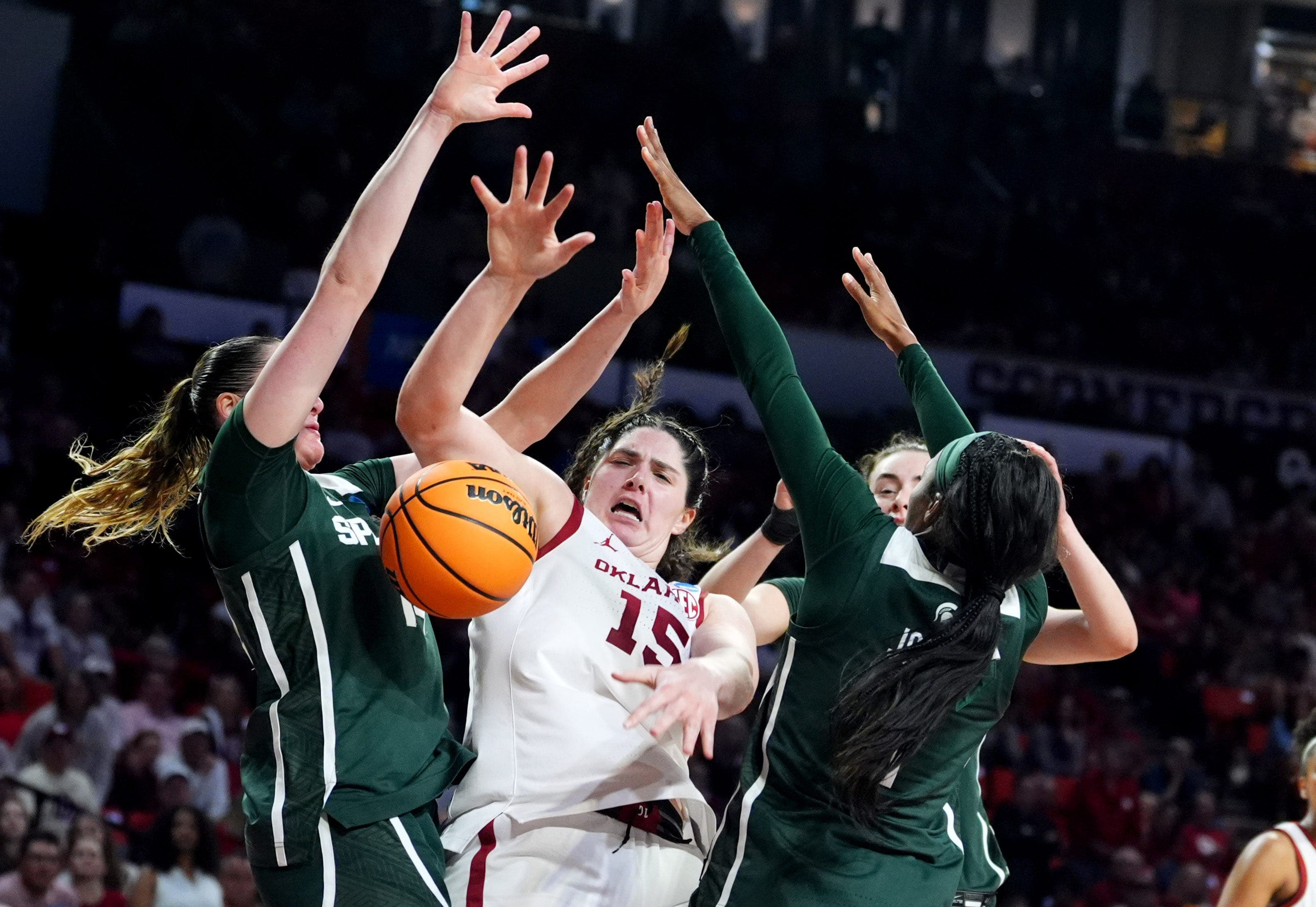
The MSU women's basketball team had a valiant effort against OU, but fell short. Full recap here.
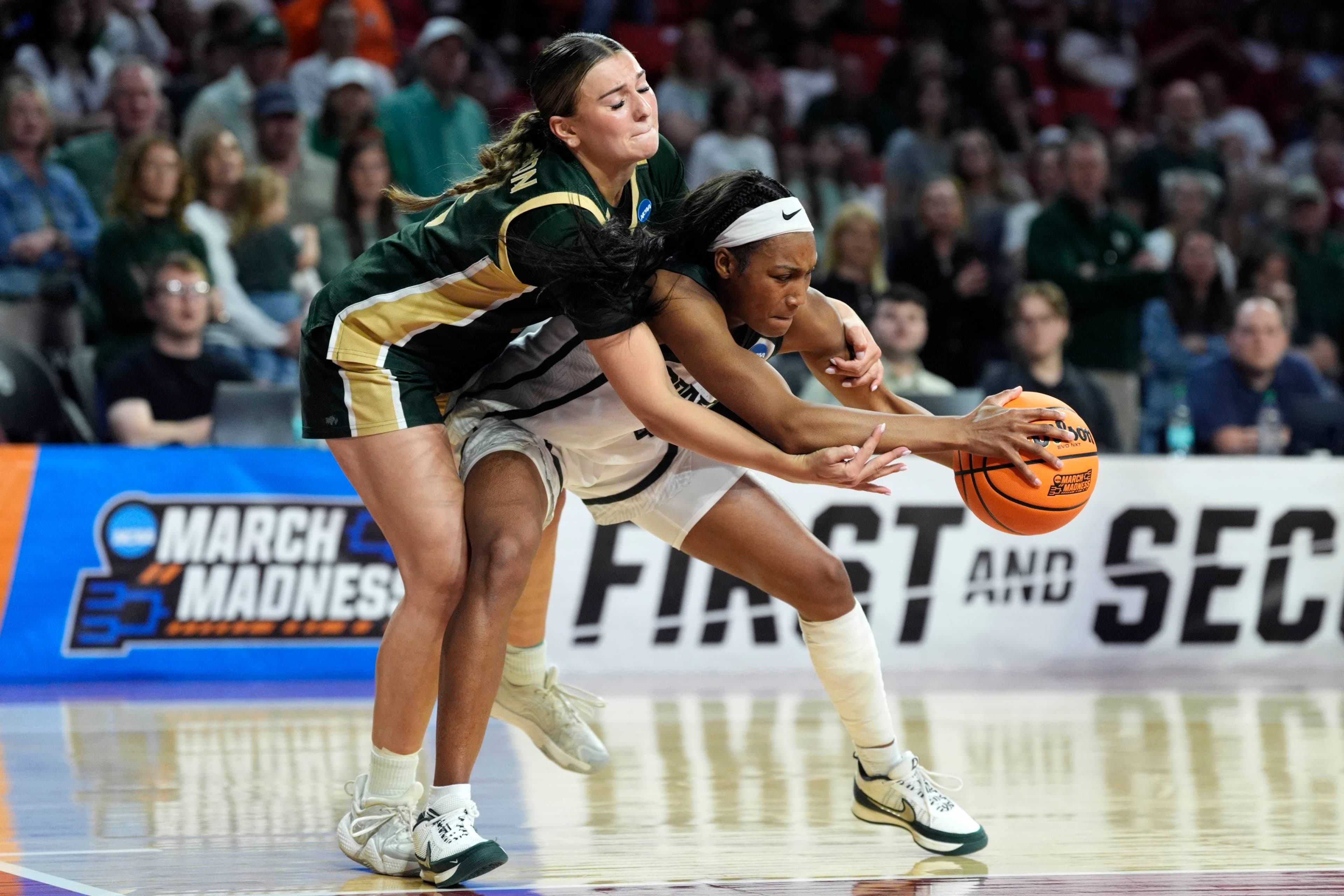
The Spartans adapted, survived, and advanced
The Spartan program has continued it's steady rise under Robyn Fralick
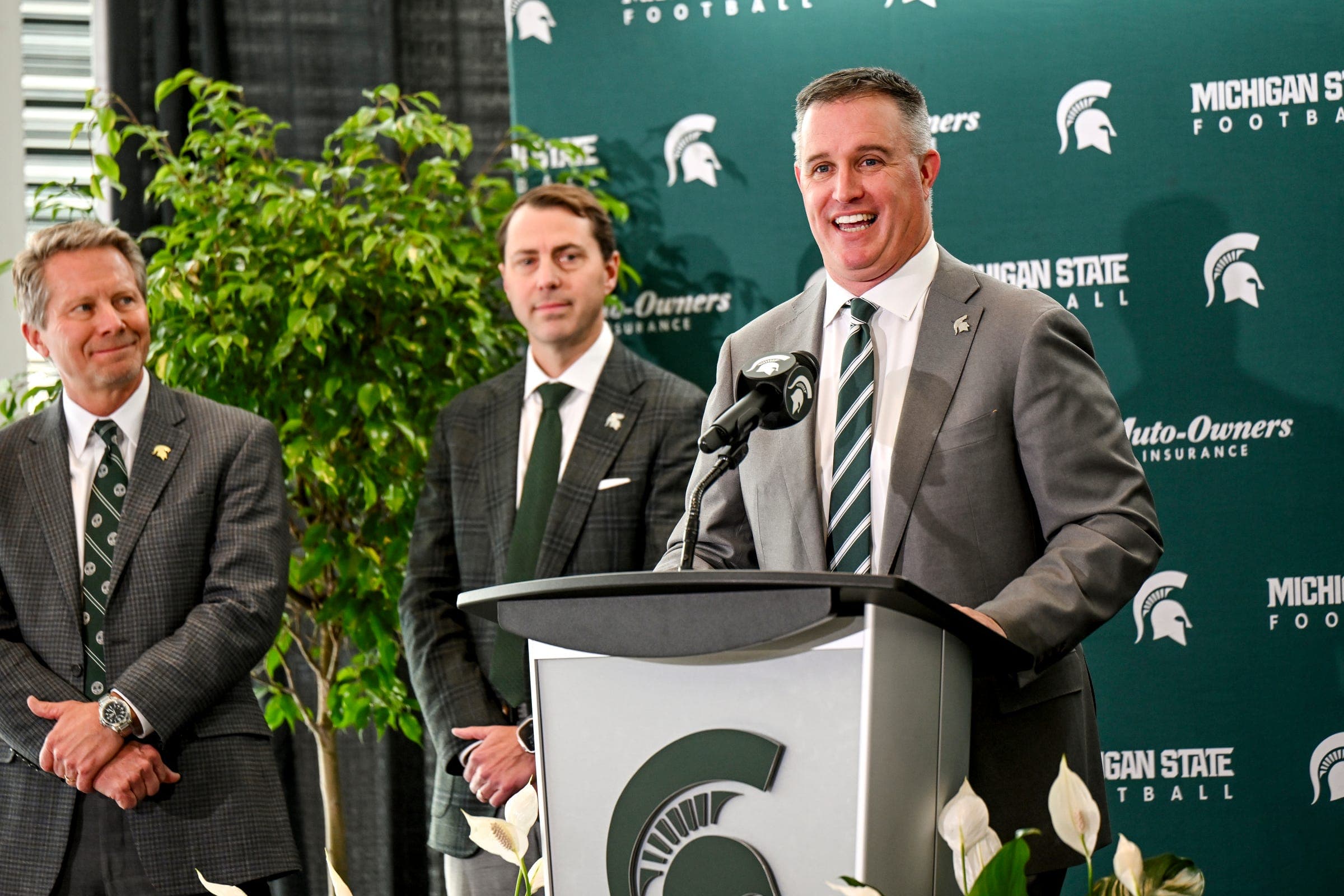
Which class of 2027 prospects are scheduling visits with Michigan State? Stay up to date here.
After 31 seasons, let's look back at exactly how dominant Izzo has been during his tenure
MSU is considering major changes around Spartan Stadium, Breslin Center, and Munn Ice Arena as proposals reveal three competing visions