
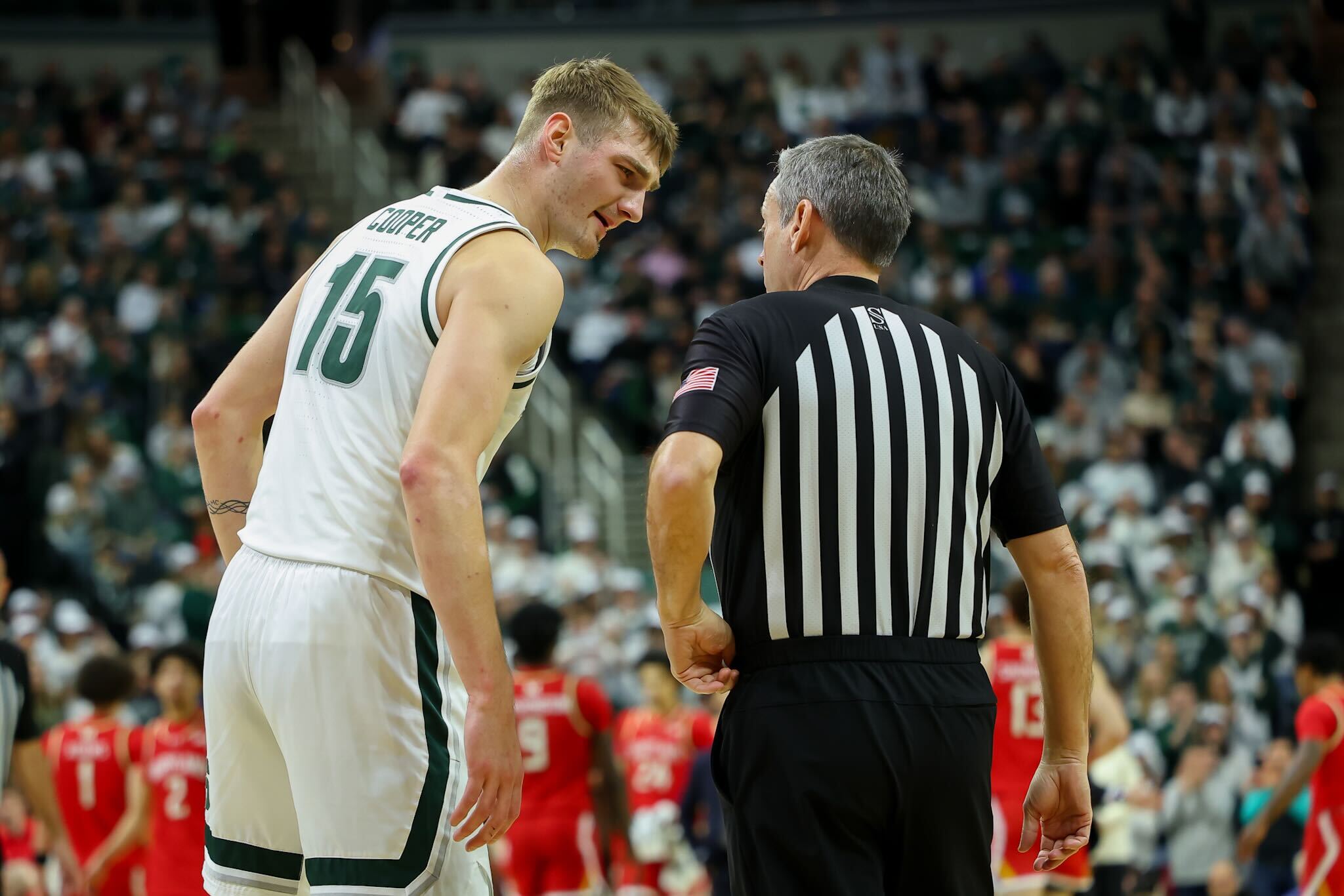
Carson Cooper’s path reflects the culture Tom Izzo continues to defend at Michigan State
Cooper could have left MSU for more minutes or more money; instead, he stayed loyal to the coaches who stayed loyal to him
College basketball has increasingly become a sport defined by movement. If players don’t find the role or minutes they want early, many are quick to look elsewhere. That trend isn’t isolated. It’s happening across the country, touching nearly every program.
Michigan State isn’t immune to it, but it is something Tom Izzo has consistently pushed against. When young players need time to develop, Izzo has shown a willingness to stay the course rather than cut bait.
Senior Carson Cooper is a clear example. As a freshman, he averaged fewer than seven minutes per game. As a sophomore, he still played under 20. Even as a junior, his minutes didn’t spike — but his impact did.
“For me, you know, he stuck with us,” Izzo said. “But there were a couple years I stuck with him more than he stuck with us. And that’s what relationships are all about in this screwed-up, transactional world that they’re trying to live.”
Inside the Michigan State locker room, trust and accountability go hand in hand. Just as important, there’s a shared willingness — from coaches and players alike — to stay committed to each other. Carson Cooper’s journey has reflected that from the start.
When he arrived in East Lansing, Cooper was a young, lightly recruited prospect trying to carve out a place in the rotation. Progress did not come quickly. There were growing pains, and moments when patience was required on both sides. Through it all, Cooper trusted his coaches, and they never wavered in their belief in him.
“You know, the fact that he kind of took a chance on just me being tall, lengthy, and able to move my feet is big,” Cooper said. “And then, you know, trusting the process is always the hardest part.”
It’s a process many players aren’t willing to wait through. More minutes, more money, and more immediate opportunity are often easier to find elsewhere. Cooper understood that those things, on their own, weren’t necessarily aligned with his long-term goals.
“I could have transferred, got more money, or gotten more playing time somewhere else,” Cooper said. “But it’s not really about that. I understand more now what a relationship is going to mean in the future.”