
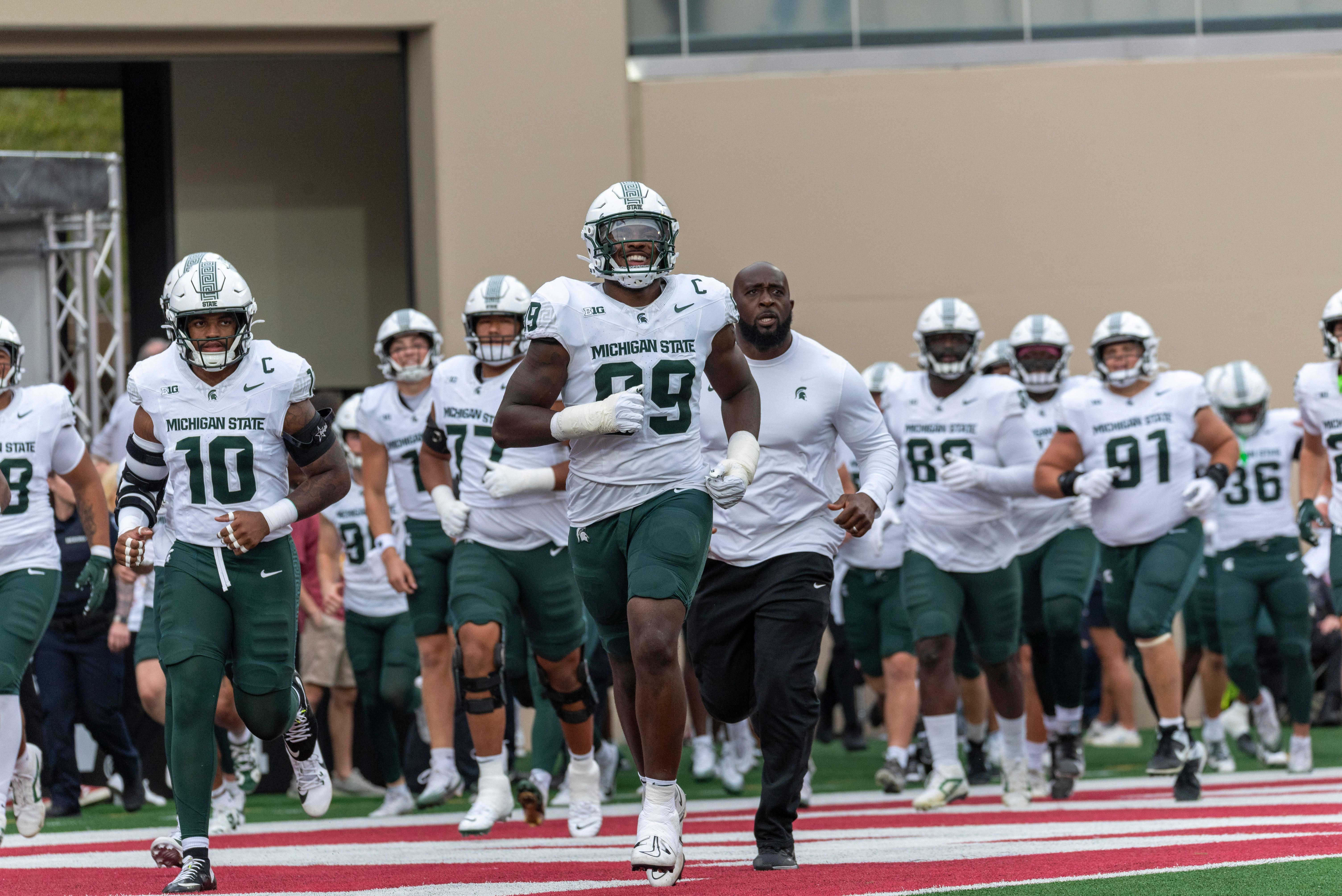
Inevitable: Michigan State’s loss to Indiana points past Smith, to a structural problem
J Batt must fix the football resources problem first
Michigan State’s 38–13 loss to Indiana wasn’t a shock to anyone paying attention. It was the predictable product of a program in transition - though not just on the field under Jonathan Smith, but structurally under new MSU Athletic Director J Batt.
When he arrived, Smith inherited a roster that was short on Big Ten-ready depth, and he was promised there would be funds in place to get him the players he needed. Unfortunately for Smith, he was backed - at the time - by an athletic department that was cautious in its calibration of how to fund college football in a new era.
Michigan State’s inability to put more points on the board, defend the run, or create more explosive plays on Saturday in Bloomington wasn’t really about effort or coaching, although it was definitely somewhat a part of it, especially defensively. It was more so about the fundamental player talent gap that exists between what MSU has and what its peers have when trying to compete at the highest level.
So, to me, the real question isn’t whether Jonathan Smith is the right man for the job. It’s whether J Batt is going to give Smith - or any coach who follows him - the tools required to win in the modern landscape of college football.
If you fire the coach - which sources tell me is very unlikely to happen in season - but don't fix the resources available to fill the evident talent gap, Batt will find himself right back here again in a couple years.
Those who read my coverage know that when Batt arrived in East Lansing, he made it clear: Michigan State would no longer focus on raising money for NIL collectives operating outside the university. Instead, it would fund a $20.5 million revenue-sharing pool within the athletic department budget - a first-of-its-kind shift designed to directly pay student-athletes under the new national framework.
That $20.5 million commitment is massive (and obviously necessary to attract top talent to East Lansing), but it doesn’t fully cover the cost of staying competitive in the new collegiate football framework.
It takes the elevator from the lobby to the first floor, where every other serious team already is.
The real question Batt is tasked with answering is how to move that elevator to the second floor, and then the third floor, and then way, way up to the championship floor.
Big Ten TV money helps cover that revenue share expense, sure, but it won’t...
Want to read the rest of this article? Subscribe today!
Subscriptions make Spartans Illustrated possible.
Upgrade today to get access to everything we publish.