
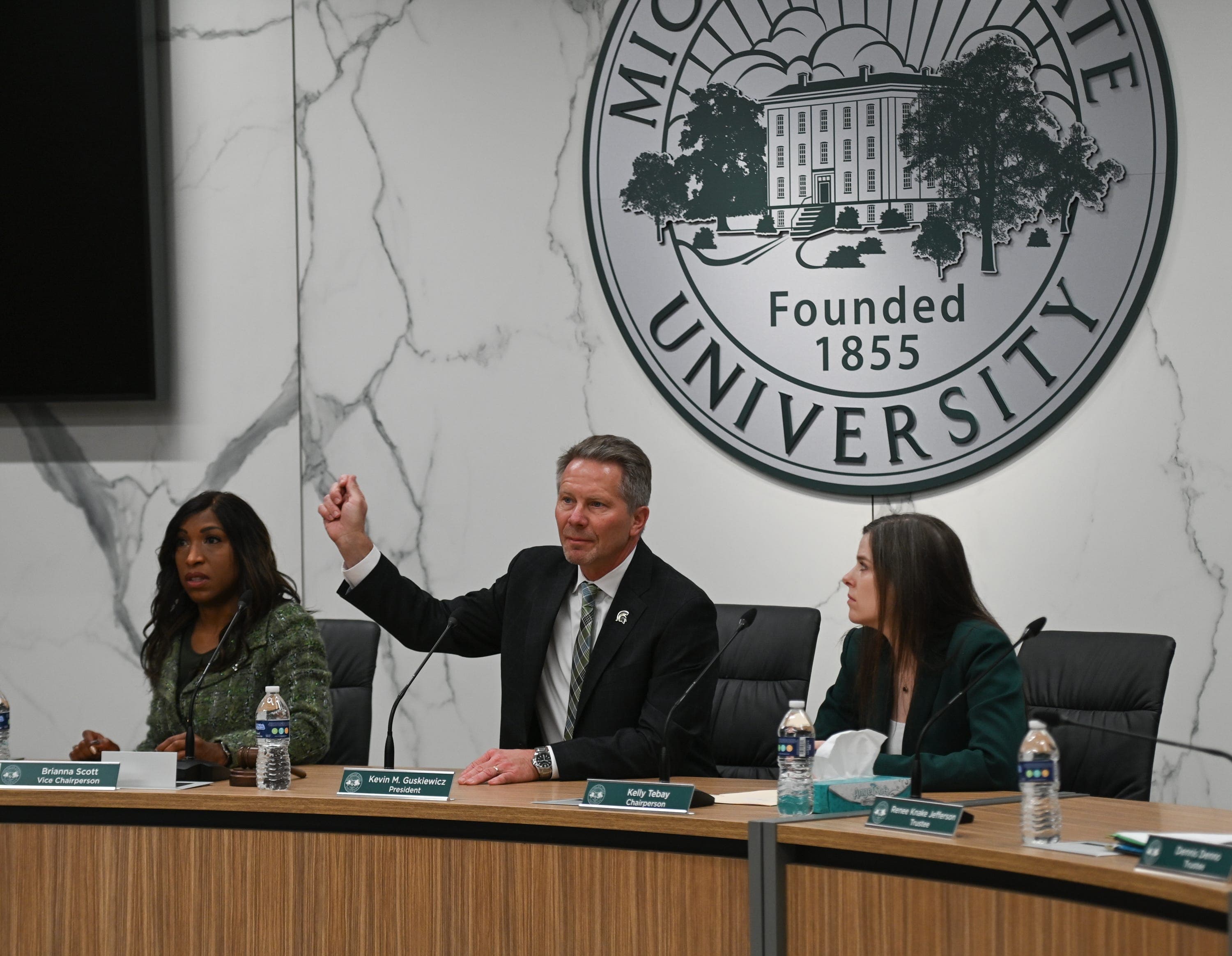
MSU trustees to consider sweeping ethics code overhaul during special Sunday meeting
Proposed revisions would expand enforcement powers, tighten confidentiality rules, restrict public dissent, and create automatic sanctions for noncompliance
The Michigan State University Board of Trustees has scheduled a special meeting for Sunday night at 8 p.m., with the session set to take place virtually via Zoom livestream.
According to the published agenda, trustees are expected to discuss two items: proposed revisions to the Board of Trustees’ Code of Ethics and Conduct and a separate personnel action. Spartans Illustrated has obtained the working draft of the revised ethics document expected to be discussed during the meeting, and the proposed changes would significantly expand both the expectations placed on trustees and the enforcement mechanisms available when those expectations are not met.
The revised language strengthens the board’s emphasis on fiduciary responsibility, confidentiality, institutional loyalty, and centralized communication authority. Trustees would formally agree not only to comply with university policy and applicable law, but also to uphold “fiduciary obligations” to the university and the state of Michigan. The proposal repeatedly reinforces the idea that trustees must operate collectively as a governing body rather than as individual actors.
Several proposed additions appear aimed at limiting unilateral action by individual trustees. One section explicitly states that no individual trustee has authority to direct administrators, faculty, or staff or otherwise act on behalf of the board or university. Another would require trustees to communicate official university business through the president, secretary of the board, or other designated administrators except in limited circumstances.
The revisions also expand expectations surrounding public communication and internal dissent. Trustees would agree not to publicly undermine board majority decisions and would commit to raising disagreements internally “in advance of board action.” New language would also prohibit trustees from making “negative or critical public statements” about board deliberations, the university, administrators, faculty, staff, students, or fellow trustees if such statements are deemed harmful to the university’s interests. At the same time, the proposal references the concept of “loyal opposition,” encouraging concerns to be raised within board processes rather than publicly.
Confidentiality provisions are also tightened considerably. Trustees would be prohibited from disclosing nonpublic information, privileged attorney-client communications, or confidential university records, and would also be barred from using insider information for personal benefit. The proposal additionally requires trustees to cooperate fully in investigations, including participating in interviews, turning over records, and potentially providing access to phones or devices during investigations into alleged ethics violations.
One of the most notable additions involves enforcement and sanctions...
Subscribe to Spartans Illustrated to continue reading...