
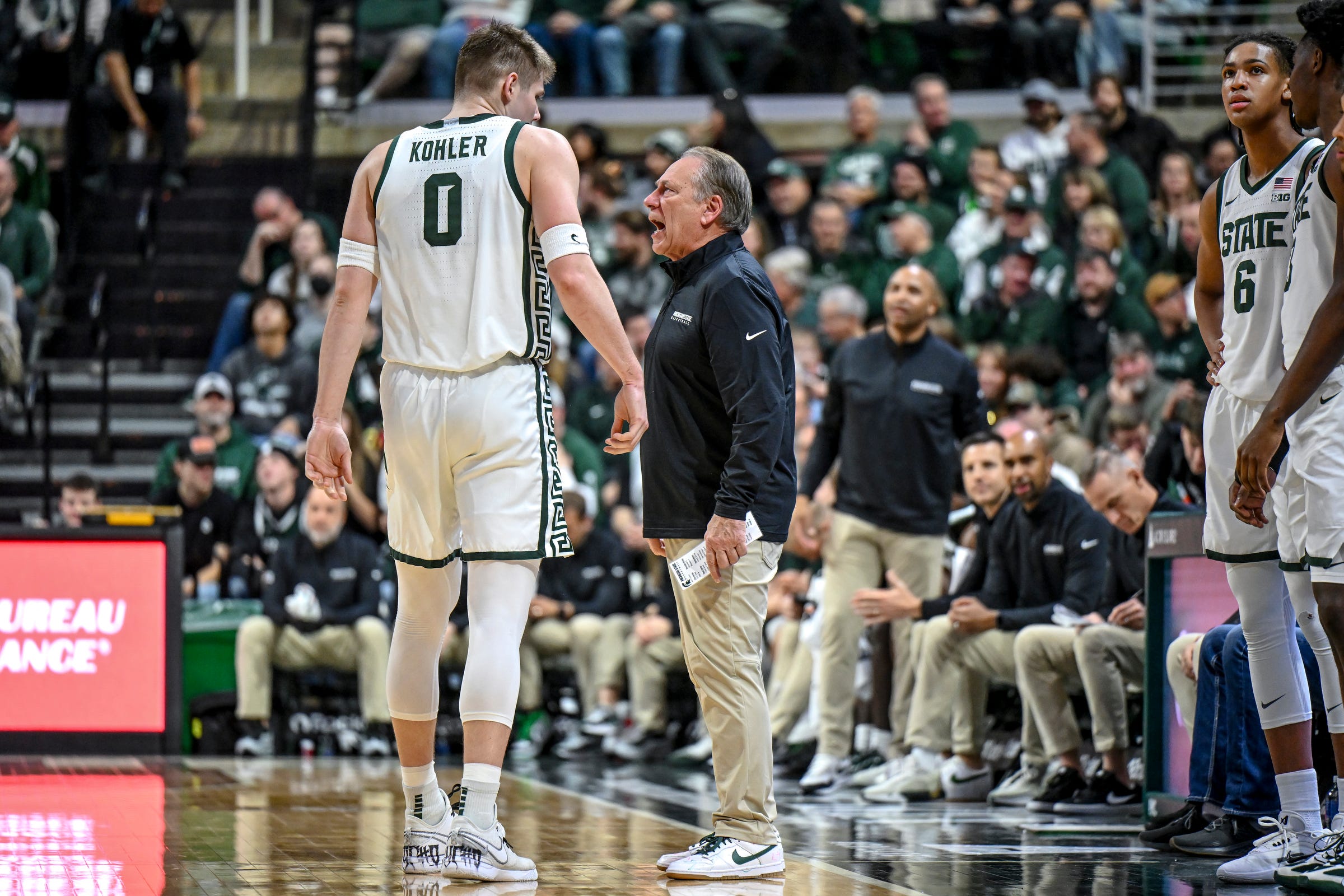
Tom Izzo is not satisfied with merely winning games — he has his sights set on much higher goals
Michigan State's dominant Tuesday night victory over Toledo is a lesson on what it takes to win a championship.
In Tuesday night’s 92-69 victory over the Toledo Rockets, the Michigan State Spartans showcased both the best version of themselves and the less than ideal version of themselves in a tale of two halves. In a game against a lower-level opponent like this, perhaps that is acceptable for fans, but it does not necessarily meet head coach Tom Izzo's standards. When conference play restarts in a few weeks, it isn’t a recipe for success, as the Spartans will need to be consistent in both halves.
Over Michigan State's last three games (loss versus Duke, win at Penn State and win versus Toledo), the Spartans had control in the second half, but lacked consistency. Each time, failing to execute in certain areas and costing the Spartans to varying degrees. Against Duke, it cost MSU the game, versus Penn State it nearly cost the Spartans the contest in a narrow victory over the Nittany Lions, and versus Toledo it left a sour taste for Izzo and company, despite a 23-point victory.
However, these are all learning opportunities for Michigan State as the Spartans aims to elevate themselves from a top-10 team to a bonafide championship contender. Lessons that can’t necessarily be learned in a film session or practice, but from understanding the margin of error that this team can afford to have on a night to night basis.
“When you’re up 25 or 30 points, it takes a real, self-driven human being to stay focused on the task at hand,” Izzo said after the game. “We showed some immaturity, and we’ve got to get better.”
This is a very fair point. In one sense, it is understandable to take your foot off the gas versus an overmatched opponent after building a 30-point halftime lead. However what often separates great teams from good teams is the ability to stay laser focused on even the little things no matter the circumstances.
Izzo is always one to take personal responsibility when his team doesn’t play to the level that he believes it should, but what also makes him a great coach is the responsibility he puts on his players to play up to program standards.