
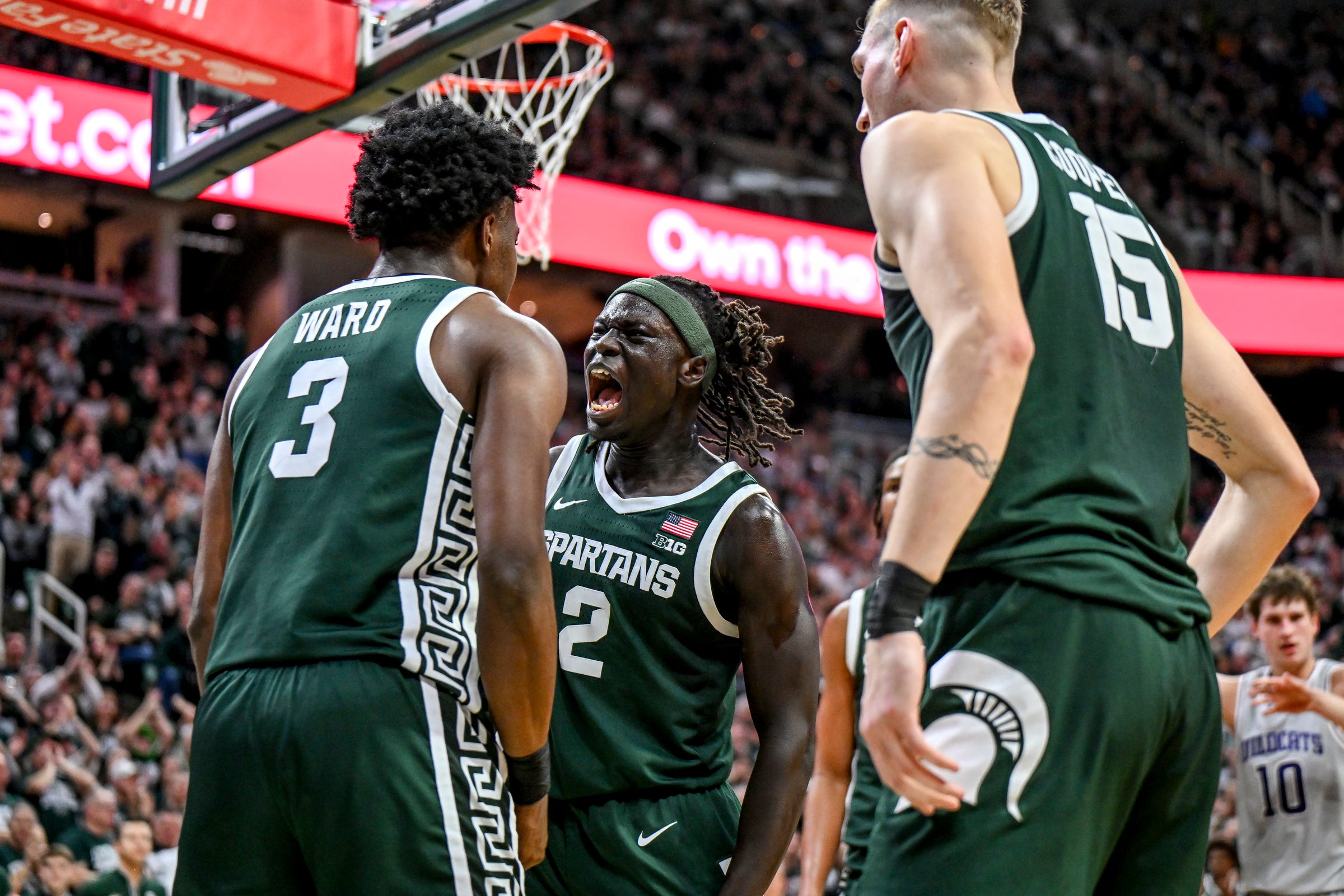
Where Michigan State’s ceiling truly lies depends on Teng and Ward
The Spartans have enough to contend - but only if Teng and Ward turn a fragile seven-man rotation into a sustainable one
Michigan State does not have the luxury of excess. It has just enough to contend.
At full strength, the Spartans can function as a seven-man rotation capable of competing with anyone in the country. But the difference between a true seven-man group and one that effectively shrinks to six is not subtle – it is structural. With season-ending injuries to Divine Ugochukwu and Kaleb Glenn before the year even began, the margin for error was narrowed from the start.
That reality places real weight on Kur Teng and Cam Ward. They do not need to score 20 points a night, but they must consistently defend, rebound, and make sound decisions. They must hit open shots, get to the free-throw line, and help steady possessions when the game tightens. Without that level of contribution, the rotation compresses and the burden on the starters becomes unsustainable.
The staff has tested other options in high-leverage minutes. Those experiments have not consistently held. The result is a simple truth: if Michigan State is going to operate as a complete team in March, Teng and Ward must function as reliable pieces within it.
SUBSCRIBE TO CONTINUE READING
Subscribers get more on the following:
The margin is not theoretical. It has already appeared in high-pressure environments against Michigan, Illinois, and Purdue, where short stretches from the bench swung momentum in opposite directions. The data from those games makes one thing clear: when Teng and Ward impact the game, Michigan State looks complete. When they do not, the structure tightens immediately.
SUBSCRIBE TO CONTINUE READING